

Dave Davies Hits Back at Moby Over ‘Lola’ Trans Criticism
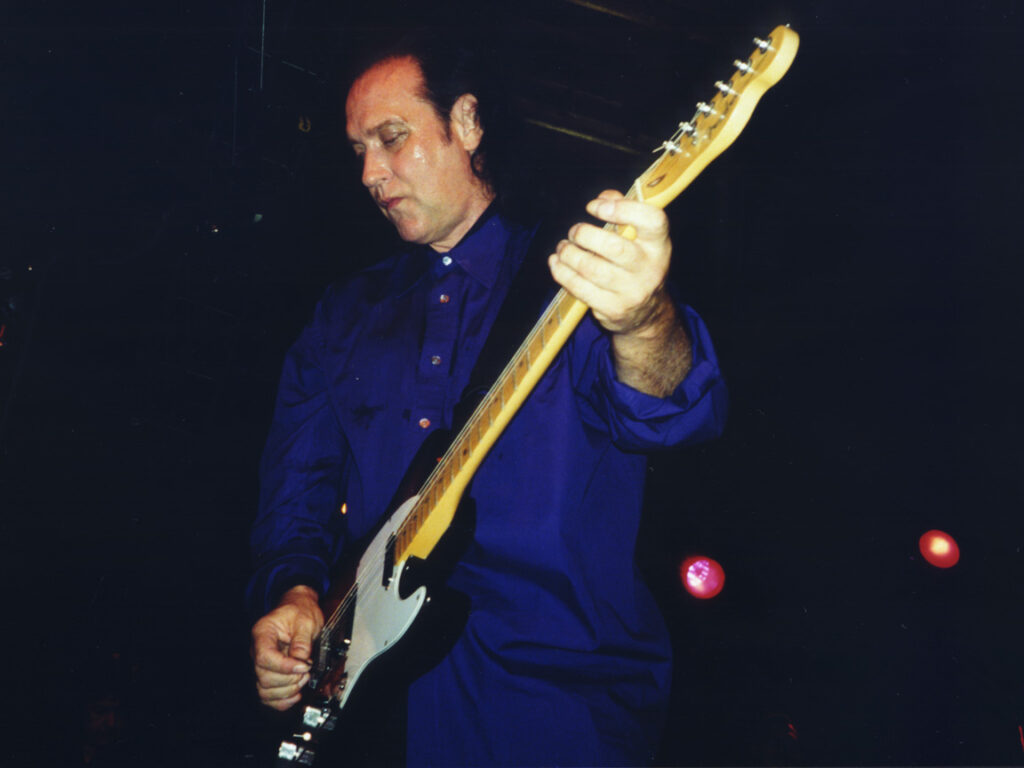
Dave Davies has fired back at Moby after the electronic artist criticized The Kinks’ 1970 classic “Lola,” opening up a new culture-war fault line around one of rock’s most debated story songs.
The flashpoint began when Moby, speaking to The Guardian’s Honest Playlist series, named “Lola” as a track he can no longer hear the same way. In that interview, Moby said the lyrics felt “gross and transphobic” and called them “unevolved,” a sharp reassessment of a song that has long occupied complicated ground between mainstream classic-rock canon and queer cultural history.
Davies, The Kinks’ co-founder and lead guitarist, did not let that pass quietly. In posts on X, he said he was “highly insulted” by the suggestion that his brother Ray Davies, who wrote “Lola,” was transphobic or culturally backward. Dave Davies also argued that Moby was flattening context, writing that the band had long-standing connections with queer communities and that “Lola” was never intended as an attack.
The broader argument here is not new, but it keeps resurfacing because “Lola” sits at a strange and important intersection in rock history. Released in 1970, the song tells the story of a young man’s encounter with a gender-nonconforming figure in Soho and includes the line, “Girls will be boys and boys will be girls / It’s a mixed up, muddled up, shook up world.” Depending on your lens, that lyric reads as either empathetic, clumsy, provocative, or all three at once.
In the immediate context of early-70s rock radio, “Lola” was unusual simply for putting gender fluidity in the center of a global hit. It reached No. 2 in the UK and No. 9 on the U.S. Billboard Hot 100, becoming one of The Kinks’ signature songs and a permanent part of classic-rock rotation. For many listeners, especially in earlier generations, it functioned as one of the first mainstream pop texts that acknowledged identities outside heteronormative expectations.
Dave Davies reinforced that defense by citing supportive testimony from transgender punk icon Jayne County, who has praised “Lola” as a song that helped bring a “hush hush” topic into public space. That endorsement has circulated widely in reaction to Moby’s comments and is now central to Davies’ argument that intent and impact should be judged within the era the song came from, not only by contemporary standards.
Still, Moby’s criticism reflects a growing tendency among artists and audiences to revisit canonical songs without granting them automatic immunity because they are old or beloved. That shift has become a defining part of modern music discourse: legacy tracks are now regularly re-evaluated through current frameworks around race, gender, sexuality, and power. In other words, this is about more than one lyric or one social post. It is about how rock history is interpreted in real time.
There is also an intra-rock dynamic at play. The Kinks belong to a generation that often framed ambiguity through irony, character sketches, and social satire. Moby, by contrast, comes from an era where explicit ideological framing is more common in public artist commentary. Those two communication styles often collide, especially online, where nuance is compressed and historical context becomes a casualty.
What makes the exchange notable is that both positions can appear internally coherent to their own audiences. Davies is arguing from intent, biography, and period context. Moby is arguing from present-day reception and listener impact. Neither frame is likely to disappear, which is why debates like this tend to outlive the original headlines.
For now, the Davies-Moby clash has put “Lola” back into the center of the conversation, not as a nostalgia artifact but as a live cultural text that still triggers disagreement more than five decades after release. That alone says something important about The Kinks’ songwriting legacy. Whatever side listeners land on, songs with no edge do not get argued over this intensely in 2026.
And in classic rock terms, that may be the most revealing part of the story: “Lola” remains exactly what enduring catalog songs often are, a mirror that changes depending on who is looking at it and when.

Related Stories

Yes Refuses to Stop Being Yes, and “Aurora” Is the Proof
There is something almost stubbornly beautiful about a band releasing its twenty-fourth studio album. Not a greatest hits repackage. Not…

Peter Frampton and Tom Morello Release New Single “Lions at the Gate”
On paper, it should not work. Peter Frampton, the man who made the talk box a household sound effect and…
Foo Fighters Drop “Of All People,” and It Sounds Like Dave Grohl Raided His Record Collection
There are exactly two modes Foo Fighters operate in at their best. The first is the arena-filling singalong, the kind…

Queen and Bowie Just Woke Up the First Moon Crew in 50 Years
There are alarm clocks, and then there is “Under Pressure” blasting through the speakers of a spacecraft 250,000 miles from…
Pink Floyd’s New “8-Tracks” Compilation Resurrects a Lost Animals-Era Gem
Announced today, “8-Tracks” is a new compilation pulling eight songs from Pink Floyd’s imperial 1971 to 1979 run. It arrives…

Woman Facing Seven Criminal Charges After Years of Allegedly Stalking Lindsey Buckingham
The nightmare that Lindsey Buckingham has been living with for the better part of five years finally landed in a…

Metallica Add Two “Intimate” Connecticut Dates to Close Out 2026
In a year dominated by the Sphere, Metallica just carved out two nights for something a little more old school.…

Lindsey Buckingham Attacked by Alleged Stalker in Santa Monica
Lindsey Buckingham had been looking forward to 2026. Just last week, the 76-year-old guitar icon posted a video to his…

Who the F**k Are the Cockroaches? Inside the Rolling Stones’ Oldest Trick and Its Mysterious 2026 Revival
If you walked through certain neighborhoods of London this week and spotted a strange poster tacked to a wall with…