

AC/DC’s Stevie Young Hospitalized in Buenos Aires as Power Up Tour Enters Critical Stretch
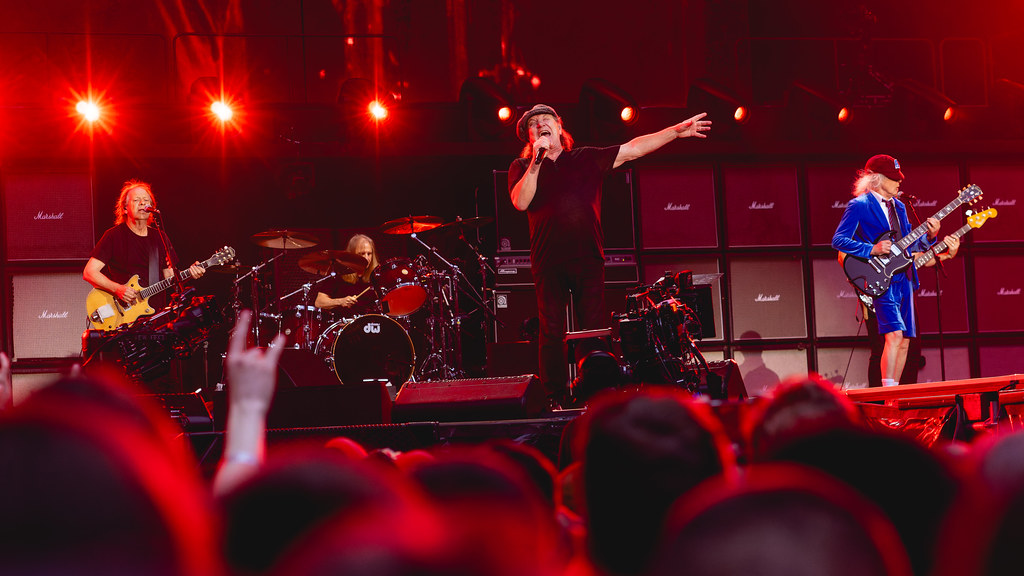
AC/DC’s current touring run hit an unexpected medical scare this week when guitarist Stevie Young was hospitalized in Buenos Aires, just days before the band’s scheduled three-night stand at River Plate. According to statements carried by Reuters and echoed by multiple music outlets, Young was admitted “out of an abundance of caution” and is undergoing a full battery of tests.
For fans, the key early update was reassuring. A spokesperson said Young was “doing well,” remained in “good spirits,” and was aiming to be back onstage Monday. Even so, the news landed hard in the hard-rock world because AC/DC is deep into a massive international cycle, and Young’s role in this lineup is more central than casual observers sometimes realize.
Why this matters right now
Timing is everything on a stadium tour. AC/DC had just played Santiago, Chile, and was set to begin a major Buenos Aires run on March 23, followed by additional Latin American dates and then a North American leg starting July 11 in Charlotte, North Carolina. The Buenos Aires shows are especially important because they mark the band’s first concerts in that city since 2009, a long gap for one of AC/DC’s most passionate markets.
When an essential player is suddenly hospitalized in that context, it is never just a backstage note. It creates immediate questions about continuity, performance level, and whether a band known for precision and force can maintain its standard if one piece of the machine is unstable. AC/DC is not built on improvisational looseness. It is built on repeatable, high-voltage execution. Any uncertainty around a core guitarist has direct implications for the show.
Stevie Young’s place in AC/DC’s modern era
Stevie Young, 69, stepped into AC/DC’s frontline guitar role in 2014 after Malcolm Young was diagnosed with dementia. That transition was both practical and deeply symbolic. Malcolm was not just a founding member. He was the band’s rhythmic architect, the player whose right hand and tonal discipline helped define AC/DC’s groove-first DNA.
Stevie had pedigree for the task. He had already subbed for Malcolm during a 1988 U.S. run and understood the material from the inside out. But inheriting that chair in the full post-2014 era was still one of the most pressure-heavy jobs in rock. The mandate was clear: preserve a foundational sound that fans can identify in seconds, night after night, at arena and stadium volume.
He played on 2014’s Rock or Bust and became a formal member of the lineup the same year. Since then, he has served as a stabilizing force through periods that included major transitions, lineup recalibration, and the band’s return to large-scale global touring. In other words, this is not a peripheral figure in the present-day AC/DC story. This is one of the players holding the modern live identity together.
The touring stakes in South America and beyond
The immediate calendar shows little room for disruption. AC/DC’s three Buenos Aires shows are followed by three Mexico City dates in April. After that, the Power Up Tour shifts into a heavyweight North American schedule with stops in Columbus, Madison, San Antonio, Denver, Las Vegas, San Francisco, Edmonton, Vancouver, Atlanta, Houston, South Bend, St. Louis, Montreal, Toronto, East Rutherford, and Philadelphia through late September.
That itinerary is not only long. It is physically punishing, logistically tight, and designed around high-demand venues where postponements ripple through staffing, ticketing, local operations, and fan travel plans. A hospitalization in this phase naturally triggers concern even when messaging remains optimistic. In legacy acts, risk management is part of tour design, but health events still carry real consequences because there is so little slack built into modern stadium routing.
What fans should read into the “abundance of caution” language
In tour communications, that phrase usually signals two things at once: there is a legitimate issue that needed medical evaluation, and the camp is trying to avoid speculation before test results are complete. It is a standard but meaningful formulation. It does not imply panic, but it also does not minimize the seriousness of putting an artist under immediate hospital care during an active international leg.
The encouraging part of this update is the reported mood and intent. “Good spirits” and an expected return date suggest no public indication of a long-term derailment at this stage. Until formal medical specifics are released, that is the responsible lane for coverage: acknowledge concern, report verified facts, and avoid guesswork.
The bigger AC/DC picture
If there is one takeaway from this moment, it is that AC/DC’s current run remains a high-wire balancing act between legacy power and real-world wear. The band continues to draw at stadium scale because the songs still hit with uncommon force and the live product remains disciplined. But each interruption reminds everyone how much modern touring depends on health, durability, and contingency planning.
Stevie Young’s hospitalization is therefore more than a brief health bulletin. It is a stress test for a touring operation that has been executing at enormous scale. For now, the signals are positive, and the expectation remains that he will return quickly. If that happens, this episode will likely be remembered as a short but tense detour in a major campaign year.
Still, the rock audience has learned to treat these moments with seriousness and perspective. AC/DC can survive a rough day. What matters is whether the band can keep the engine intact over the full arc of 2026. Young’s condition, and his ability to resume the grind, sits near the center of that question.


Related Stories
U2’s Bono and The Edge Move Obama to Tears at Presidential Center Opening
Bono and The Edge performed ‘City of Blinding Lights’ at the Barack Obama Presidential Center dedication in Chicago on June 18, visibly moving the former
Syd Barrett’s 80th Birthday Marked With Cambridge Concert and Star-Studded Tribute Album
A tribute concert at Cambridge Corn Exchange and a new album featuring Pink Floyd, David Gilmour, and David Bowie mark what would have been Syd Barrett’s 80th
Aimee Mann Nearly Skipped Rush Reunion Tour After Geddy Lee’s Email
Aimee Mann reveals she nearly passed on performing ‘Time Stand Still’ with Rush on their Fifty Something reunion tour after receiving an email from Geddy Lee.
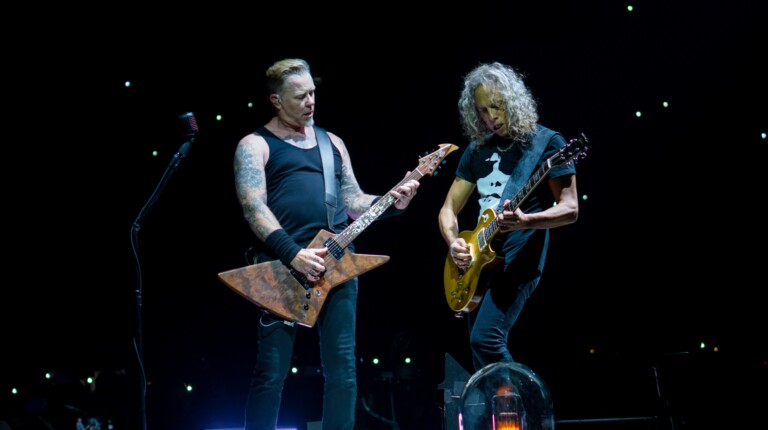
Kirk Hammett Releases Official Video From Frankfurt ‘The Collection: Live’ Event
Kirk Hammett has shared an official video of his May 23 ‘The Collection: Live’ book event at Zoom Saal in Frankfurt, featuring a surprise jam with Robert

Stewart Copeland Says He and Sting ‘Get Along Just Fine’ Despite Royalty Lawsuit
The Police drummer Stewart Copeland opens up about his friendship with Sting, the ongoing royalty lawsuit in U.K. High Court, and calling himself ‘fully
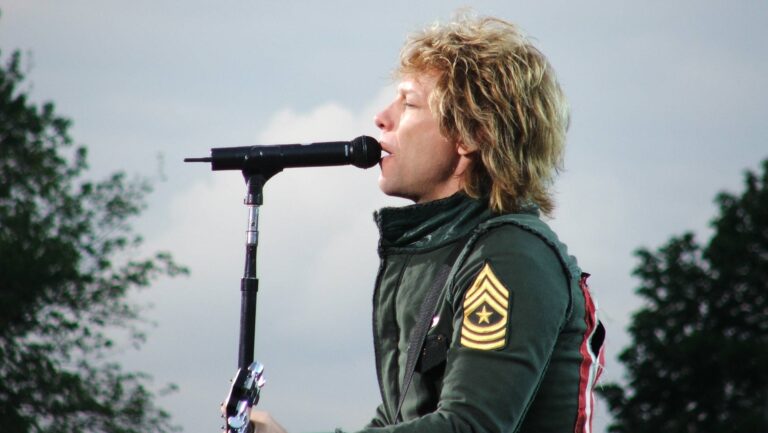
Jon Bon Jovi Declares Full Vocal Recovery, Announces Massive Tour Dates
Jon Bon Jovi says he’s ‘fully recovered’ from 2022 vocal cord surgery as Bon Jovi announce a nine-night MSG residency and UK/Ireland stadium shows for 2026.
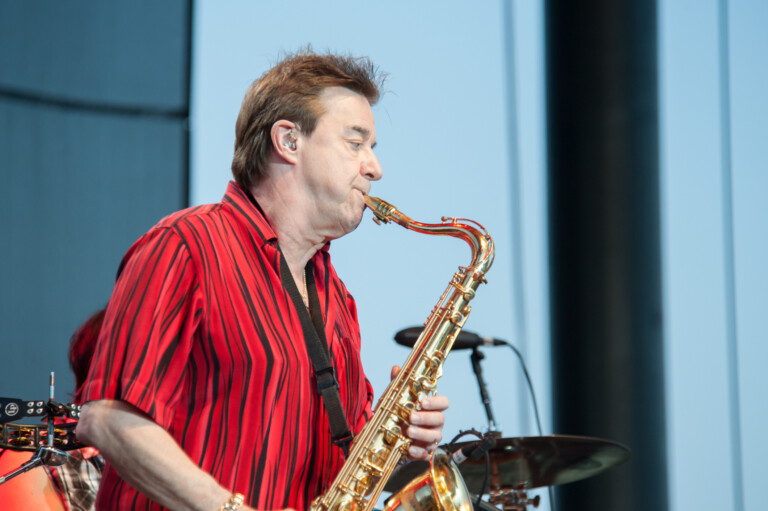
Walter Parazaider, Founding Saxophonist of Chicago, Dead at 81
Walter Parazaider, the founding saxophonist and creative architect of Chicago, died June 17 at 81 after a six-year battle with Alzheimer’s disease.
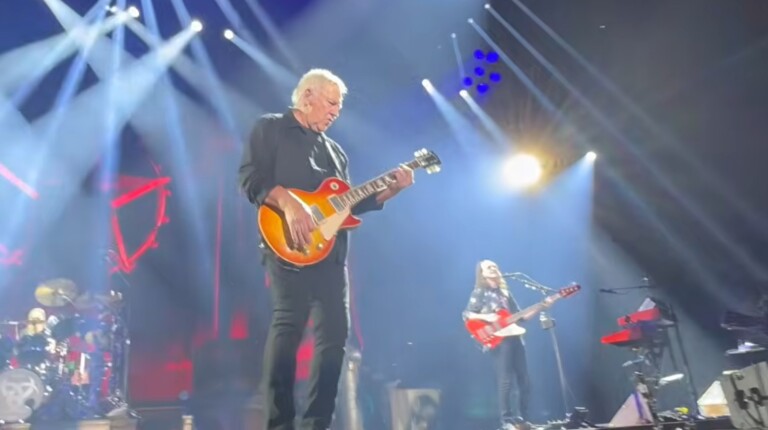
Rush Thanks Fans After Inglewood Opener
Rush kicked off the Fifty Something Tour in Inglewood with Alex Lifeson, Geddy Lee, and Anika Nilles. The band thanked fans after four opening nights.
Steve Miller Books Two Fall 2026 Concerts at NYC’s Rose Theatre
Steve Miller confirms two concerts at Frederick P. Rose Hall in New York City on Oct. 9 and 10, 2026, honoring his blues and jazz heroes.