

Billy Joel Honored at Carnegie Hall With All-star Tribute Set
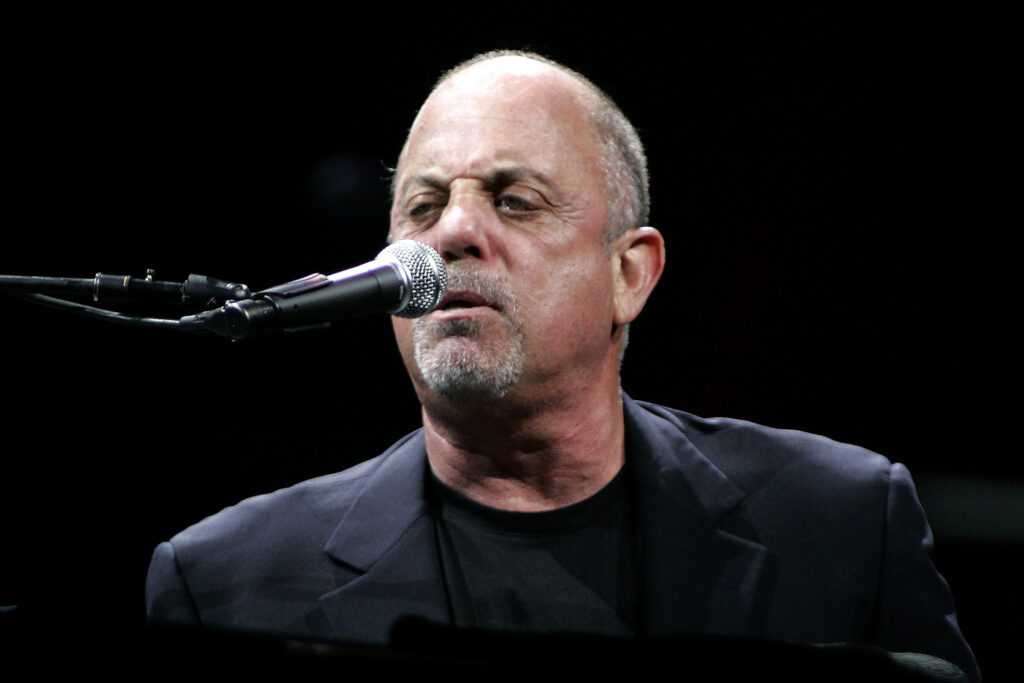
Billy Joel's tribute at Carnegie Hall on March 12, 2026 delivered the kind of night that can easily collapse under its own expectations, but this one held together. Billed as The Music of Billy Joel, the concert combined marquee names, family ties, deep-catalog picks, and full-room singalong material without turning into a disconnected medley show.
By post-event reporting, Joel attended and received a standing ovation while watching from the balcony. That image alone gave the night a charged emotional center. But what made the show work artistically was the programming. The set moved between signature hits and less-obvious songwriting choices, then let each performer reframe the material in their own voice rather than forcing vocal cosplay.
A tribute designed as a songbook, not a jukebox
Many all-star tributes stick to obvious picks and familiar dynamics. This one reportedly opened with “Movin' Out (Anthony's Song)” and quickly showed it was willing to travel deeper: “Everybody Loves You Now,” “Stiletto,” “Get It Right the First Time,” and “This Night” all appeared alongside big-room anchors like “Piano Man,” “Uptown Girl,” “Big Shot,” and “You May Be Right.”
That balance matters with Joel's catalog. His mass appeal was built on hit singles, but his long-term critical standing comes from craft: narrative songwriting, harmonic movement, character detail, and melodic turns that can survive reinterpretation. The Carnegie Hall set, as reported, treated those strengths as the point of the evening.
The result was a program that played like a live editorial on Joel's range. It honored the obvious crowd favorites while making space for songs that better explain why musicians still gravitate to his writing in the first place.
Complete reported track list and who performed each song
Below is the reported performance order with artist pairings from event recaps:
- “Movin' Out (Anthony's Song)” — Yola
- “Vienna” — Rob Thomas
- “She's Always a Woman” — Pat Monahan
- “And So It Goes” — Mary Chapin Carpenter
- “I Go to Extremes” — Matt Nathanson
- “Miami 2017 (Seen the Lights Go Out on Broadway)” — Matt Nathanson
- “Everybody Loves You Now” — Jon McLaughlin
- “This Night” — Alexa Ray Joel
- “Lullabye (Goodnight, My Angel)” — Rufus Wainwright
- “Turn the Lights Back On” — Ledisi
- “The Downeaster ‘Alexa'” — Marc Roberge and Itzhak Perlman
- “She's Got a Way” — Bettye LaVette (performed as “He's Got a Way”)
- “The Longest Time” (piano sonata) — David Rosenthal
- “My Life” — Wyclef Jean and Music Will Academy
- “Stiletto” — Neal Francis
- “The River of Dreams” — Sammy Rae
- “Get It Right the First Time” — Sammy Rae
- “Allentown” — Natalie Merchant
- “Scenes From an Italian Restaurant” — Billy Joel Band and Dan Orlando
- “Uptown Girl” — Curtis Harding
- “Big Shot” — Gavin DeGraw
- “Only the Good Die Young” — Lawrence
- “Piano Man” — Andrew McMahon
- “You May Be Right” — full-cast finale
Performance choices that gave the night weight
Several pairings stood out for musical reasons, not just name recognition. “The Downeaster ‘Alexa'” with Marc Roberge and Itzhak Perlman was one of the night's boldest combinations on paper, and it fit the song's working-class narrative intensity. Bettye LaVette's reframe of “She's Got a Way” to “He's Got a Way” showed the material can absorb perspective changes without losing emotional core.
Alexa Ray Joel singing “This Night” gave the show a personal connection that felt earned rather than engineered. Sammy Rae's two-song stretch in the second half, followed by Natalie Merchant and Gavin DeGraw in late prime slots, helped keep the pacing from flattening before the inevitable closing run of crowd anthems.
The inclusion of Joel-affiliated players as structural backbone, as reported in coverage, also mattered. Rotating lead vocals can fragment a tribute quickly, but steady musical architecture underneath can keep tone and tempo cohesive across very different singers.
Why Carnegie Hall was the right room
This was a New York songbook tribute in a room that rewards lyric-forward writing. Joel's catalog has always lived at the intersection of piano-pop hooks and city-level storytelling, from neighborhood character sketches to widescreen New York narratives. A venue like Carnegie Hall does not simply add prestige in that context. It amplifies compositional detail.
That detail came through in the reported flow of the set list. Moving from intimate pieces like “And So It Goes” and “Lullabye (Goodnight, My Angel)” into larger communal numbers like “Only the Good Die Young” and “You May Be Right” mirrors the emotional range that made Joel's live shows durable across generations.
In that sense, the event did more than celebrate a legacy artist. It offered a practical demonstration that Joel's writing remains interpretable at scale, which is ultimately the best test for whether a catalog has become repertory music.
A substantial tribute with a usable record
Viewed as a full program, this tribute succeeded because it combined breadth and discipline: 24 songs, major guest variety, deep-cut credibility, and a coherent arc from opener to full-cast finale. It gave fans the hits they came for, but it also made a stronger argument that Billy Joel's catalog is still active material for serious performers.
For readers who wanted the specifics, the complete track list and performer credits above are the key record of the night. For the broader industry conversation, the headline is that Joel's work can still anchor an ambitious, multi-artist tribute without feeling like nostalgia theater. That is not common. It is exactly why this Carnegie Hall night mattered.
Related Stories
Lindsey Buckingham Attacked by Alleged Stalker in Santa Monica
Lindsey Buckingham had been looking forward to 2026. Just last week, the 76-year-old guitar icon posted a video to his…
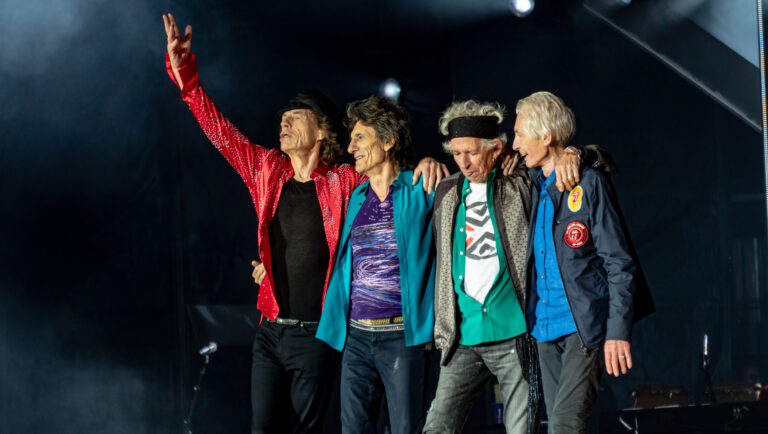
Who the F**k Are the Cockroaches? Inside the Rolling Stones’ Oldest Trick and Its Mysterious 2026 Revival
If you walked through certain neighborhoods of London this week and spotted a strange poster tacked to a wall with…
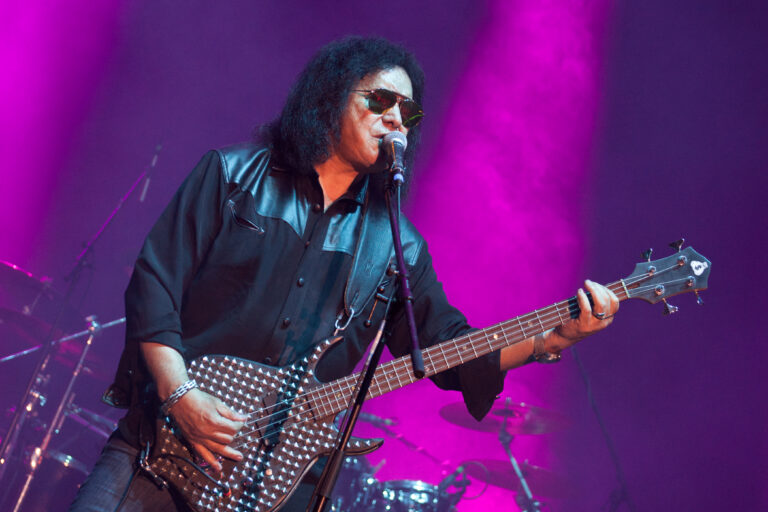
Gene Simmons Solo 2026 Tour Dates
Kiss may have taken its final bow, but Gene Simmons clearly did not get the memo that he was supposed…
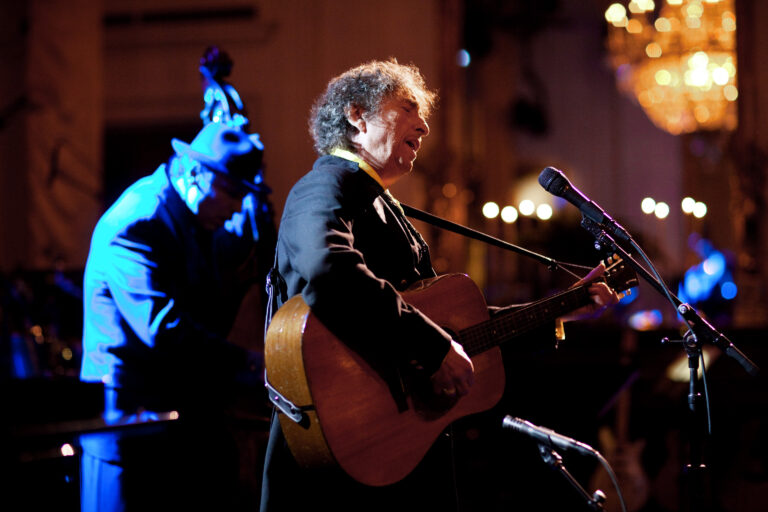
Bob Dylan Launches Patreon Page, But It’s Not What You’d Expect
Bob Dylan has never been easy to predict. But even by his standards, his latest move has left fans and…
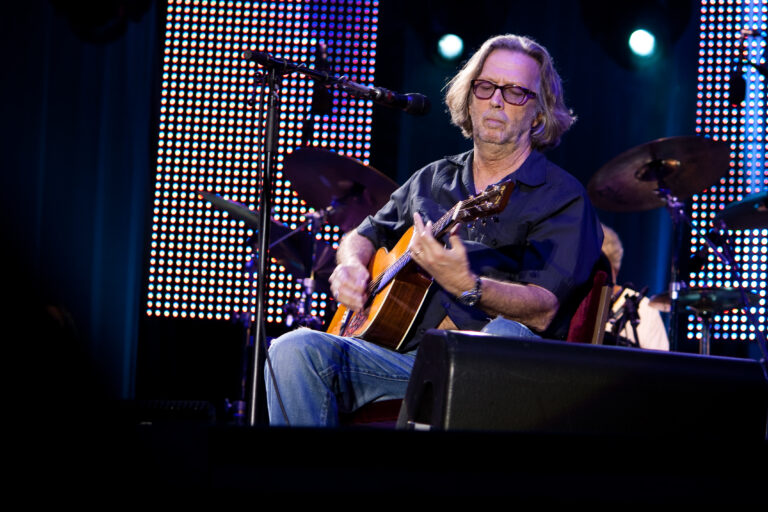
Eric Clapton’s Crossroads 2026 Is Headed to Austin With a Two-Night Guitar All-Star Summit
Eric Clapton’s Crossroads Guitar Festival has never been about subtlety. It is about guitar heroes, big rooms, louder amps, and…
Deep Purple and Kansas 2026 Tour Dates Kick Off in April
Deep Purple and Kansas are two very different rock institutions, but that contrast is exactly why their 2026 run has…
Hear It: Jimmy Page Releases New Version of ‘Ten Years Gone,’ Reframing a Zeppelin Masterwork
Jimmy Page has opened a new chapter in Led Zeppelin history by releasing a fresh version of “Ten Years Gone,”…
Paul McCartney at the Fonda: What Actually Happened at the March 28 Hollywood Show
Paul McCartney’s March 28 stop at the Fonda Theatre in Hollywood was the kind of show that reminds you why…
Lindsey Buckingham Hints at Reconciliation With Stevie Nicks: ‘Something That’s in the Air’
Lindsey Buckingham has reopened one of classic rock’s most emotionally loaded storylines, and he did it with a phrase that…