

Michael Anthony on Van Halen’s Unreleased Music
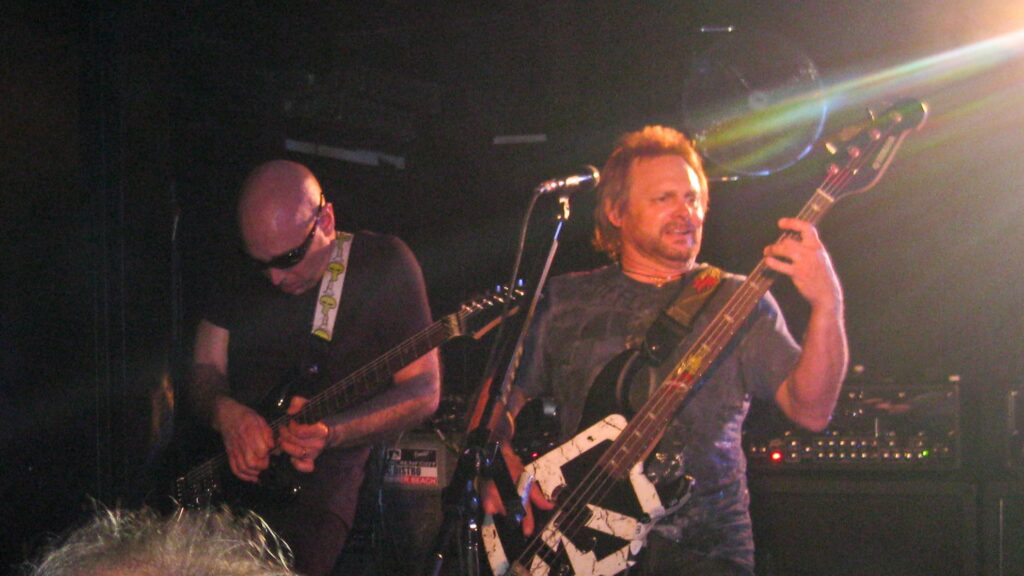
Michael Anthony is not trying to start rumors. He is trying to set a standard.
In a recent interview with Matt Spatz on Cleveland rock station WNCX, the former Van Halen bassist addressed the latest discussion around unreleased Van Halen recordings and what, if anything, should happen next. Anthony said he believes the strongest and most respectful approach would be to complete material as an instrumental tribute to Eddie Van Halen, rather than recasting the project around a new frontman and turning it into something that feels like a fresh band launch.
That distinction matters. For Van Halen fans, this is not just another legacy-catalog conversation. It is a debate about identity. The catalog is one of the most recognizable in hard rock, and every decision tied to unreleased music immediately raises a larger question: does this sound and feel like Van Halen, or does it sound like a separate project carrying a famous name?
Anthony, who has not been in Van Halen since 2006, made clear he is not involved in the current archival process. Still, his comments carry weight because he is part of the band's core history and understands both eras of the group at a working level. His point on WNCX was not to close the door on future releases. It was to argue for a release strategy that protects the musical DNA fans associate with Eddie, Alex, and the broader Van Halen legacy.
The timing of his remarks also lands in a high-interest moment. Over the last stretch, fan conversation around possible vault material has intensified, especially as comments from people close to the Van Halen camp have suggested that unfinished recordings exist and are being reviewed. If any of that material eventually moves toward official release, expectations will be unusually high. The audience will not judge those tracks as curiosities. They will judge them against a catalog that includes some of the most influential guitar-driven records in American rock.
That is why Anthony's “legacy-first” framing is notable. Releasing archival recordings can be done in several ways: as raw historical documents, as heavily modernized productions, or as carefully finished works that preserve the era and intent of the original sessions. Anthony's argument aligns with the third path. Keep the focus on the music itself. Keep the standard high. Keep the emotional center on Eddie.
There is also a practical layer to what he said. Introducing a new lead singer into post-era Van Halen material would immediately shift public conversation away from the songs and toward lineup politics. That kind of reaction cycle can overshadow the purpose of an archival release, which is usually to celebrate a body of work, not restart brand-era debates. By contrast, an instrumental approach would place attention on the playing, arrangements, and compositional ideas, which is where many fans believe this music belongs.
None of this guarantees what will happen next. The Van Halen camp has been deliberate about how the catalog is handled, and there is no announced timeline for a major archival rollout. But Anthony's WNCX interview gives fans and industry watchers a clear read on one influential perspective: if unreleased Van Halen music reaches the public, it should arrive in a form that sounds complete, respectful, and unmistakably connected to Eddie's legacy.
For now, that is the headline. Not a release date, not a rollout tease, and not a manufactured controversy. Just a direct message from a former member who knows the stakes: if this music is going to be heard, it has to be done right.

Related Stories
Lindsey Buckingham Attacked by Alleged Stalker in Santa Monica
Lindsey Buckingham had been looking forward to 2026. Just last week, the 76-year-old guitar icon posted a video to his…
Who the F**k Are the Cockroaches? Inside the Rolling Stones’ Oldest Trick and Its Mysterious 2026 Revival
If you walked through certain neighborhoods of London this week and spotted a strange poster tacked to a wall with…
Gene Simmons Solo 2026 Tour Dates
Kiss may have taken its final bow, but Gene Simmons clearly did not get the memo that he was supposed…
Bob Dylan Launches Patreon Page, But It’s Not What You’d Expect
Bob Dylan has never been easy to predict. But even by his standards, his latest move has left fans and…
Eric Clapton’s Crossroads 2026 Is Headed to Austin With a Two-Night Guitar All-Star Summit
Eric Clapton’s Crossroads Guitar Festival has never been about subtlety. It is about guitar heroes, big rooms, louder amps, and…
Deep Purple and Kansas 2026 Tour Dates Kick Off in April
Deep Purple and Kansas are two very different rock institutions, but that contrast is exactly why their 2026 run has…
Hear It: Jimmy Page Releases New Version of ‘Ten Years Gone,’ Reframing a Zeppelin Masterwork
Jimmy Page has opened a new chapter in Led Zeppelin history by releasing a fresh version of “Ten Years Gone,”…
Paul McCartney at the Fonda: What Actually Happened at the March 28 Hollywood Show
Paul McCartney’s March 28 stop at the Fonda Theatre in Hollywood was the kind of show that reminds you why…
Lindsey Buckingham Hints at Reconciliation With Stevie Nicks: ‘Something That’s in the Air’
Lindsey Buckingham has reopened one of classic rock’s most emotionally loaded storylines, and he did it with a phrase that…