

Neil Young Takes Aim at Politics and Billionaires in New Protest Song
Overview
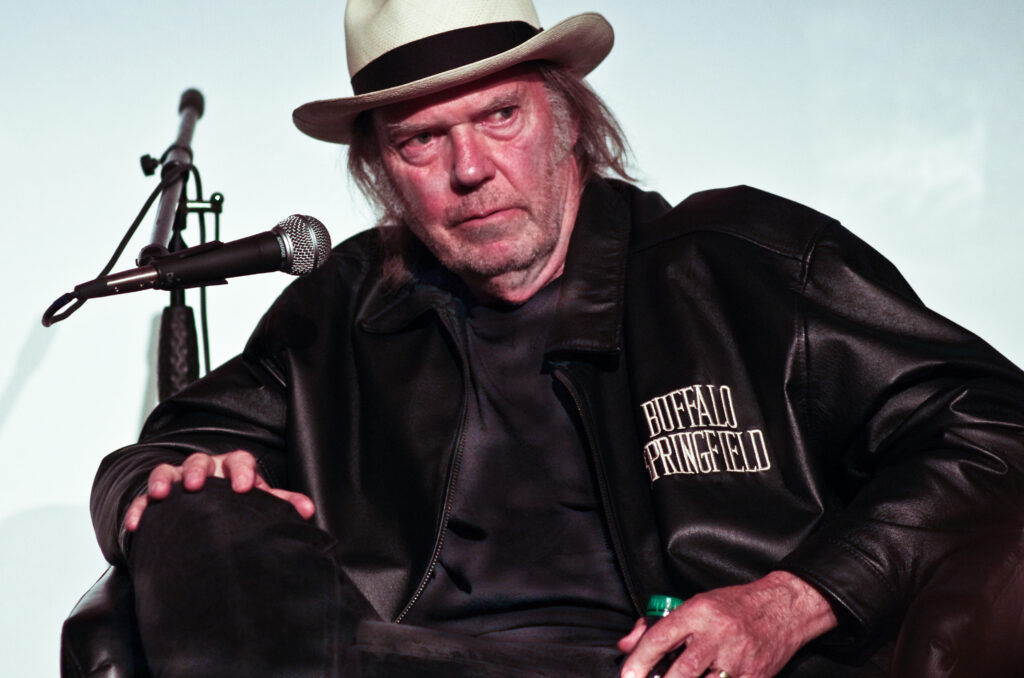
Neil Young and his backing band The Chrome Hearts debuted “Big Crime” during their show at the Huntington Bank Pavilion at Northerly Island in Chicago, IL. The song is a direct protest piece taking aim primarily at the policies and actions of Donald Trump, especially his administration’s use of federal agents and National Guard troops in Washington, D.C.
Lyrics & Message
Some of the key lyrics include:
“Don’t need no fascist rules / Don’t want no fascist schools / Don’t want soldiers on our streets”
“There’s big crime in D.C. at the White House”
“No more money to the fascists, the billionaire fascists / Time to blackout the system / No more great again”
These lines show Young in his familiar mode: straightforward, confrontational, and politically engaged. This isn’t subtle; he’s using his musical platform to make a strong statement about authority, surveillance, and governance.
Musical and Contextual Significance
-
This follows earlier songs of Young’s in 2025 that carry pointed critique, like “Let’s Roll Again,” which targeted both Elon Musk and Tesla and called for renewed US manufacturing efforts.
-
“Big Crime” is part of the album era around Talkin to the Trees (with The Chrome Hearts) in 2025.
-
The live debut as part of a concert with a sound-check version posted online signals Young’s willingness to go direct to fans and bypass traditional release channels.
Why It Matters
-
Politically charged art: Young has made protest songs a recurring element of his work (e.g., “Ohio,” “Let’s Impeach the President”), and “Big Crime” continues this lineage.
-
Cultural snapshot: The song references concrete events like the federal takeover of D.C. policing and Guard deployment, making it timely.
-
Artist relevance: At this stage of his career, Young remains active, vocal, and artistically engaged rather than just resting on his legacy.
-
Musical accompaniment: The backing band (The Chrome Hearts) brings in newer collaborators like Micah Nelson, adding a fresh edge to Young’s sound.
Critical Reception & Early Reactions
-
Media outlets have described the song as “scathing,” “direct,” and “unambiguously protest rock.”
-
Fans have noted the live debut was fiery and well received in Chicago, with the song appearing 13th in the setlist of a 17-song show.
-
Some commentary notes that while Young has criticized Trump before, “Big Crime” is perhaps his most overt single-song condemnation in this era.
Analysis
-
Tone & Style: Young returns to his hard rock protest roots. The instrumentation is rawer, and the lyrics less metaphorical than some of his past work. Compared to his folk or acoustic protest songs, this feels more urgent and loud.
-
Target Audience: Fans of Neil Young are the core audience, but this also appeals to listeners interested in socially conscious rock. It may attract younger audiences who respect veteran artists engaging with current issues.
-
Potential Impact: The song may not become a mainstream radio hit, but it reinforces Young’s legacy and provokes discussion about the issues he raises. It also underscores his willingness to take risks late in his career.
-
What to Watch:
-
Will Young release a studio version beyond the sound-check or live take?
-
Will “Big Crime” appear regularly in his setlists?
-
Could this mark a broader protest-rock phase for Young and The Chrome Hearts in 2025?
-
“Big Crime” finds Neil Young doubling down on protest rock in 2025. Instead of looking back on his catalog, he’s focused on the present: federal overreach, militarization, and what he calls “fascist rules” and “soldiers on our streets.” With its raw sound, pointed lyrics, and timely subject matter, the song is a clear statement. For those who appreciate music that tackles politics directly, this is one of the most powerful examples of the year.
Key Takeaways
-
ultimateclassicrock.com | Ultimate Classic Rock
-
www.jambase.com | JamBase
-
www.theguardian.com | The Guardian
TOP STORIES
RELATED ARTISTS
Related Stories
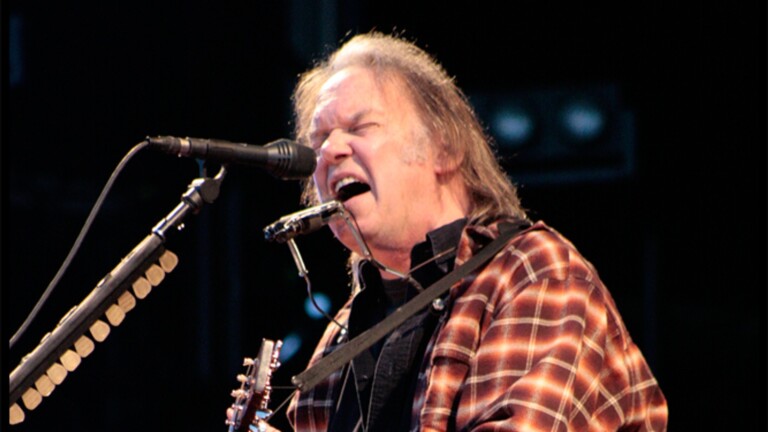
Neil Young Sues Trump Fundraising Group Again Over ‘Rockin’ in the Free World’
Neil Young has filed a new $10 million copyright lawsuit against a Trump fundraising committee, accusing it of playing “Rockin’ in the Free World” without permission at an Ohio rally.
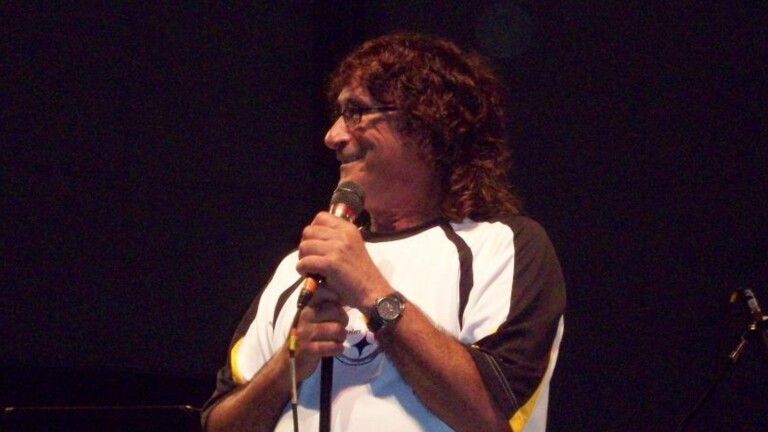
Donnie Iris, Pittsburgh Rock Icon, Dies at 83
Donnie Iris, the Pittsburgh rocker known for ‘Ah! Leah!’ and ‘The Rapper,’ died on Monday, October 26, 2026, at age 83, just weeks after announcing his retirement from live performing.
Nikki Sixx Discusses Vince Neil’s Health and Live Vocals After Fourth Stroke
Motley Crue’s Nikki Sixx addresses Vince Neil’s recovery from his fourth stroke and the singer’s push to prove himself vocally on tour, as the band details its upcoming fourth Las Vegas residency.
Santana Announces 2027 Global Tour
Santana has unveiled the Planet of Free Will Global Tour 2027, a 13-date run through Europe and the UK that opens at London’s The O2 on June 30 and wraps up in Helsinki on July 31.
Fleetwood Mac Documentary ‘The Chain’ Gets Title and Release Date
Fleetwood Mac: The Chain, the band’s first fully authorized documentary, arrives on Apple TV on January 29, 2027, coinciding with the 50th anniversary of Rumours.
John Anderson, ‘Swingin” and ‘Seminole Wind’ Singer, Dies at 71
John Anderson, the Country Music Hall of Fame singer behind “Swingin'” and “Seminole Wind,” has died at age 71, only days after taking part in Nashville’s 2026 Medallion Ceremony.
Judas Priest Locks In First Confirmed 2027 US Tour Date at Boardwalk Rock
Judas Priest has confirmed its first US concert of 2027, a slot on the Iron Maiden-headlined Sunday bill at the Boardwalk Rock festival in Ocean City, Maryland.
Robert Plant Opens Up on Son Karac’s 1977 Death and His Quiet Life Today
In a new Sunday Times interview, Robert Plant describes how the 1977 death of his five-year-old son Karac altered his attachment to Led Zeppelin, and shares details of his present-day life in a small Worcestershire village.
Bon Jovi Extends 2027 Stadium Dates, Expanding Forever Tour to Australia, UK and North America
Bon Jovi is expanding its Forever Tour with seven new 2027 stadium shows spanning Australia, the UK and North America, building on sold-out dates at Madison Square Garden and Wembley Stadium earlier this year.