

ChatGPT and Spotify Team Up for Music Recommendations, But Should We Be Excited or Worried?

Introduction
ChatGPT and Spotify have announced a new partnership that lets users request personalized music and podcast recommendations directly through OpenAI’s conversational interface. On paper, it sounds futuristic, imagine describing your mood and instantly getting a playlist. But beneath the excitement, many listeners and privacy advocates are starting to ask harder questions: how much data are we giving up, and who really benefits from this AI-driven music matchmaking?
What This Integration Actually Does
According to both companies, the collaboration allows users to link their Spotify accounts to ChatGPT. From there, they can ask for music or podcast recommendations in plain language, such as “make me a road trip playlist” or “suggest something mellow for Sunday mornings,” and ChatGPT will surface personalized results pulled from Spotify’s vast library.
The system can even launch songs and playlists directly within the Spotify app, creating a seamless bridge between conversation and listening.
Technically, it’s an impressive feat. But the deeper this partnership goes, the more questions arise about what kind of data and emotional signals are being collected, and how they might be used beyond simply recommending songs.
The Promise vs. The Unease
1. A smarter way to discover music, or a smarter way to track behavior?
Spotify already knows what you listen to, when, and for how long. Now, ChatGPT introduces the why. Your prompts such as “I’m sad,” “I’m stressed,” or “I need motivation” reveal emotional states that could, in theory, be stored, analyzed, or monetized.
While Spotify insists user privacy remains protected, the combination of behavioral data from Spotify and emotional language data from ChatGPT could form one of the most detailed personal profiles ever compiled by a consumer tech product.
2. Seamless integration, but at what cost?
The convenience is undeniable. You can ask for a “playlist for when it rains” or “songs like early Coldplay” and get instant results. But seamless experiences often come with hidden trade-offs: fewer choices, more algorithmic control, and less transparency about why certain tracks appear in your feed.
If ChatGPT starts shaping your listening habits, rather than you exploring on your own, how much of your taste is still your own?
3. AI creativity vs. corporate curation
There is also a philosophical concern. Music recommendation used to feel human, passed along by friends, DJs, or local scenes. Now, we are outsourcing our mood curation to a language model trained by a corporation with opaque incentives. The line between discovery and manipulation grows thinner when AI is in charge of both interpreting your emotions and monetizing them.
Privacy, Data, and the Black Box Problem
Neither company has fully explained how much conversational data from ChatGPT will flow back to Spotify, or how it will be anonymized.
-
Could AI prompts be used to enhance Spotify’s ad targeting?
-
Will emotional or situational language such as “I’m lonely” or “I’m in love” become new data points in user profiling?
-
What happens if AI suggestions subtly prioritize content based on business goals rather than user interest?
The lack of clear answers has made some experts uneasy. Tech privacy researchers warn that AI-powered personalization can easily cross into surveillance territory, especially when combined with long-term listening histories.
The Developer Angle: A Doorway to More Integration or Exploitation?
OpenAI’s new Apps SDK allows Spotify to plug directly into ChatGPT as an “in-chat app,” letting developers build workflows that connect both platforms. That means third parties could, in time, create custom “music assistants,” playlist bots, or emotional health apps powered by both datasets.
It’s a playground for creativity, and a potential minefield for consent. How will smaller developers handle personal music and emotional data responsibly? History suggests not all will.
Early Reactions: Fascination and Skepticism
Fans and creators are split. Some hail the integration as the next step in music discovery, a blend of natural conversation and streaming power. Others see it as another encroachment by AI into deeply human territory.
Even musicians have voiced concern that AI recommendation systems flatten taste and funnel attention toward mainstream catalogs, reinforcing Spotify’s dominance at the expense of smaller artists.
A Future Worth Watching Carefully
There’s no denying the brilliance of the technology. The ability to describe your mood and have an AI instantly deliver a soundtrack is, in some ways, magical. But it’s also deeply intimate, and that intimacy is now being shared with machines and corporations that may not share our values.
As ChatGPT and Spotify deepen their collaboration, users would do well to ask not just what they gain in convenience, but what they surrender in control.
Final Thought
AI-powered recommendations promise to understand us better than ever. The real question is whether that understanding serves us, or the systems designed to keep us listening, clicking, and feeding the machine.
Progress does not always come without a price. And in the case of ChatGPT and Spotify, the bill might be paid in something more personal than money: our moods, our habits, and our humanity.
Key Takeaways
-
newsroom.spotify.com | Spotify Newsroom
-
www.engadget.com | Engadget
-
www.theverge.com | The Verge
-
www.reuters.com | Reuters
TOP STORIES
RELATED ARTISTS

Related Stories
U2’s Bono and The Edge Move Obama to Tears at Presidential Center Opening
Bono and The Edge performed ‘City of Blinding Lights’ at the Barack Obama Presidential Center dedication in Chicago on June 18, visibly moving the former
Syd Barrett’s 80th Birthday Marked With Cambridge Concert and Star-Studded Tribute Album
A tribute concert at Cambridge Corn Exchange and a new album featuring Pink Floyd, David Gilmour, and David Bowie mark what would have been Syd Barrett’s 80th
Aimee Mann Nearly Skipped Rush Reunion Tour After Geddy Lee’s Email
Aimee Mann reveals she nearly passed on performing ‘Time Stand Still’ with Rush on their Fifty Something reunion tour after receiving an email from Geddy Lee.
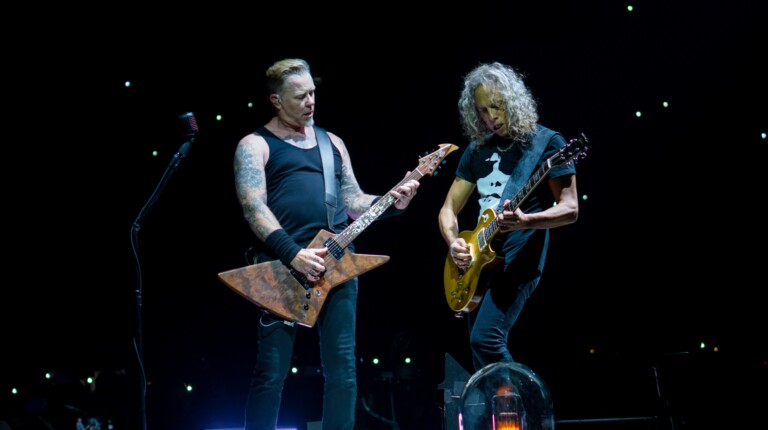
Kirk Hammett Releases Official Video From Frankfurt ‘The Collection: Live’ Event
Kirk Hammett has shared an official video of his May 23 ‘The Collection: Live’ book event at Zoom Saal in Frankfurt, featuring a surprise jam with Robert

Stewart Copeland Says He and Sting ‘Get Along Just Fine’ Despite Royalty Lawsuit
The Police drummer Stewart Copeland opens up about his friendship with Sting, the ongoing royalty lawsuit in U.K. High Court, and calling himself ‘fully

Jon Bon Jovi Declares Full Vocal Recovery, Announces Massive Tour Dates
Jon Bon Jovi says he’s ‘fully recovered’ from 2022 vocal cord surgery as Bon Jovi announce a nine-night MSG residency and UK/Ireland stadium shows for 2026.

Walter Parazaider, Founding Saxophonist of Chicago, Dead at 81
Walter Parazaider, the founding saxophonist and creative architect of Chicago, died June 17 at 81 after a six-year battle with Alzheimer’s disease.
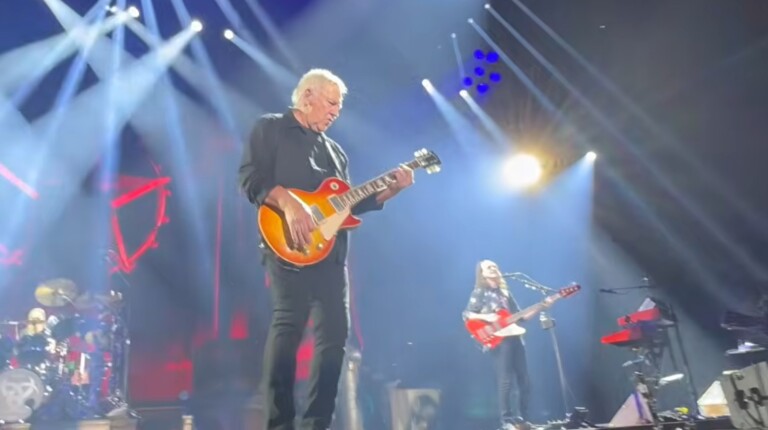
Rush Thanks Fans After Inglewood Opener
Rush kicked off the Fifty Something Tour in Inglewood with Alex Lifeson, Geddy Lee, and Anika Nilles. The band thanked fans after four opening nights.

Steve Miller Books Two Fall 2026 Concerts at NYC’s Rose Theatre
Steve Miller confirms two concerts at Frederick P. Rose Hall in New York City on Oct. 9 and 10, 2026, honoring his blues and jazz heroes.