

Gene Simmons Wishes He Had Staged the Intervention He Never Staged for Ace Frehley
The hardest sentences in rock and roll are the ones that come too late.
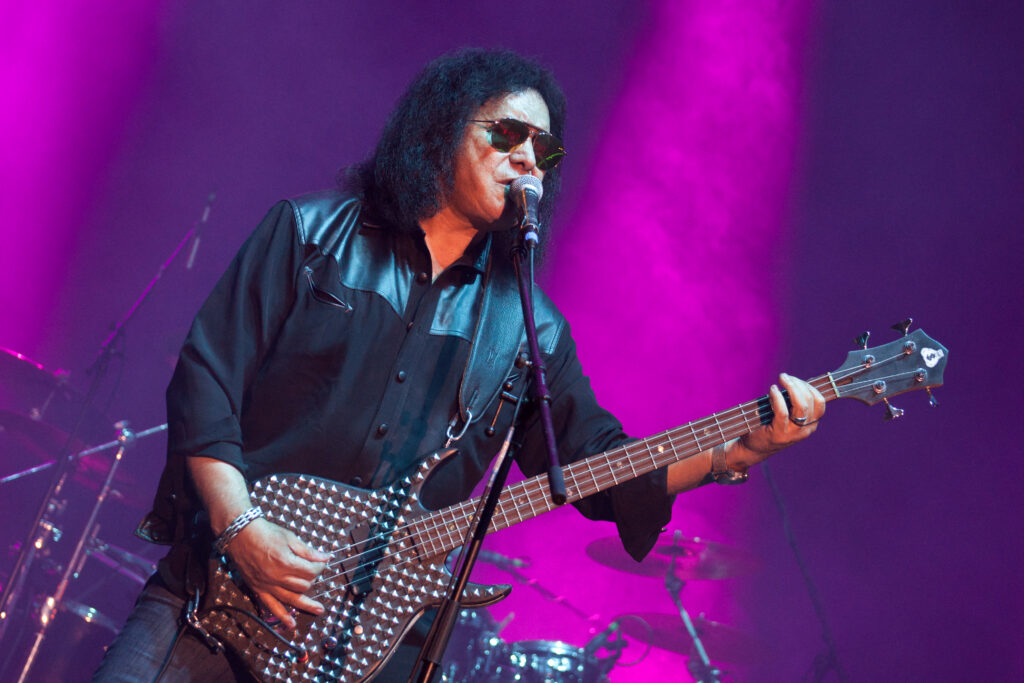
Gene Simmons has been issuing them for months now, in increasingly raw form, in the wake of Ace Frehley’s death last October at the age of 74. The most recent installment arrived this week on the Inside Of You With Michael Rosenbaum podcast, where the Kiss bassist sat for what amounts to a long, uncomfortable accounting of a fifty-year relationship that ended with a fall down a flight of stairs in a New Jersey home studio. Asked whether he had any good conversations with the late guitarist before he died, Simmons did not pivot to anecdote. He opened the books.
“It’s been up and down for 50 years with Ace,” Simmons told Rosenbaum. “And the fans often would hate me for telling the truth.” He reached for an analogy that has clearly been rattling around his head for a while, the one about parents and divorce, where the kids only see the broken house and not the reasons it broke. The fans, in his telling, are the kids. He is the parent trying to explain why dad got thrown out, and why dad sometimes deserved it, and why dad was still dad.
What followed was a litany. Frehley, Simmons said, would not show up. There were guitar parts on Destroyer that did not get done on time. There was a Eurovision appearance, with Kiss as headliners, that Simmons offered as a representative example of what life with Frehley could be. Peter Criss got grouped into the same paragraph, gently. Both men, in Simmons’s telling, were in and out of the band three separate times, and both of them turned, early, to “beverages and chemicals.” If you had met Ace at the beginning, Simmons insisted, you would have fallen in love with him. The dark cloud, as he put it, came in with the money.
None of that is new from Gene Simmons. What is new is the regret.
“It was a stupid and shameful decision on all our parts,” Simmons said, naming his own complicity first, “is, ‘No, you don’t wanna get the fans upset.'” He went on to say, with unmistakable weight, that he wishes he had staged an intervention decades ago and forced Frehley to understand that his lifestyle was not a private matter, that it was hurting his family, his daughter, and the fans who loved him. He said he tried to talk Frehley out of his first Kiss departure in 1982. He said Frehley, in his words, never made smart decisions. He said almost nothing in his own defense.
This is not the first version of this confession. At the 2025 Kiss Kruise in Las Vegas in November, Simmons offered a softer cut of the same sentiment, telling the room that if he had any regret, it was that he and Paul Stanley had not been smarter or better about trying to help Ace and Peter have better lives. A few weeks later, in an interview with the New York Post, he tipped over the line. Falling down the stairs, he said, does not kill you. There may have been other issues. It broke his heart. The phrasing, fairly or not, read to a lot of fans as Simmons assigning Frehley’s death to Frehley.
Simmons walked it back on X within days. “On reflection, I was wrong for using the words I used. I humbly apologize,” he wrote. “My hand to God I didn’t intended to hurt Ace or his legacy but upon rereading my words, I see how it hurt everyone. Again, I apologize. I’ve always loved Ace. Always.”
The Morris County Medical Examiner ruled Frehley’s death an accident, with the cause listed as blunt-trauma injuries to the head from the fall. A CT scan revealed multiple contusions, fractures to the back of the skull, hemorrhages, and a subdural hematoma. There were additional bruises on his hip, thigh, and abdomen. Frehley, by most accounts including his own, had gotten clean and sober years earlier, after a phone call from his daughter Monique. He once told Classic Rock that drugs and alcohol had been his constant companion, his best friend, and his worst enemy.
What Simmons is wrestling with, then, is not the death itself. It is the years before the sobriety, the years when an intervention might have changed a trajectory, the years when Kiss kept the tour bus moving because the tour bus had to keep moving. “Let’s just continue doing the tour because you want to get through it for selfish reasons,” Simmons said in December, almost diagnosing himself. “Meantime, somebody who might be your brother is ruining their life by bad decisions.”
The relationship between Simmons and Frehley was famously, durably toxic. Frehley accused Simmons and Stanley for years of minimizing his contributions and contributing to his addictions. In 2019 he publicly blasted Simmons over remarks about his sobriety that he said cost him work. The two never made the kind of peace that gets photographed.
But in February of this year, in Lake Charles, Louisiana, the Gene Simmons Band played “Strange Ways” and “Rocket Ride” for the first time, two Frehley songs from the Hotter Than Hell and Love Gun eras. No speech, no announcement. Just the songs. Whatever Simmons could not say in a hospital room or a green room or a fifty-year career, he said with a setlist.
Some interventions, in the end, are private. Some are posthumous. Some are both.

Related Stories
Robert Plant Opens Up on Son Karac’s 1977 Death and His Quiet Life Today
In a new Sunday Times interview, Robert Plant describes how the 1977 death of his five-year-old son Karac altered his attachment to Led Zeppelin, and shares details of his present-day life in a small Worcestershire village.
Bon Jovi Extends 2027 Stadium Dates, Expanding Forever Tour to Australia, UK and North America
Bon Jovi is expanding its Forever Tour with seven new 2027 stadium shows spanning Australia, the UK and North America, building on sold-out dates at Madison Square Garden and Wembley Stadium earlier this year.
Motley Crue Sets 2027 ‘Carnival of Sins in Sin City’ Residency at Caesars Palace
Motley Crue has unveiled an eight-show Las Vegas residency, ‘Carnival of Sins in Sin City,’ set for The Colosseum at Caesars Palace from March 19 to April 3, 2027.
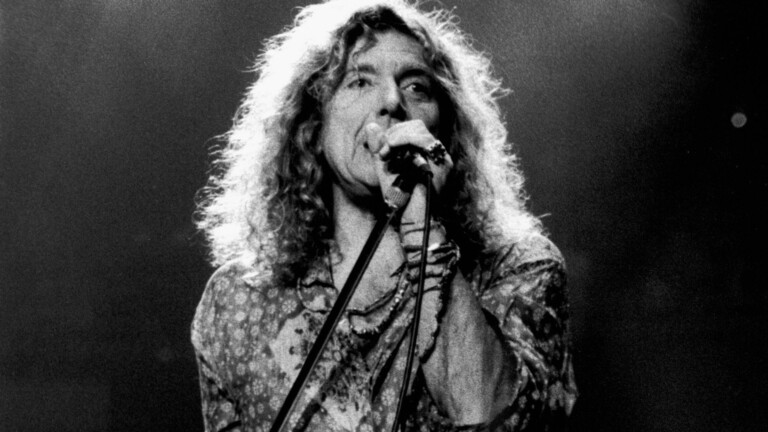
Led Zeppelin Lets ‘Stairway to Heaven’ Soundtrack a Movie Trailer for the First Time, for Greta Gerwig’s Narnia Film
Led Zeppelin has granted permission for ‘Stairway to Heaven’ to appear in a film for the first time, backing the debut trailer for Greta Gerwig’s Narnia: The Magician’s Nephew.
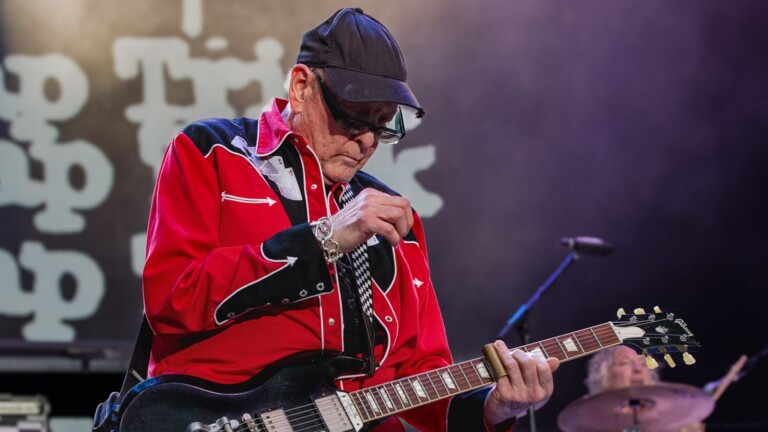
Cheap Trick 2027 Concert Dates Announced
Cheap Trick has booked its first three concert dates for 2027, set for February and April, as the band’s ongoing All Washed Up Tour continues through the fall of 2026.
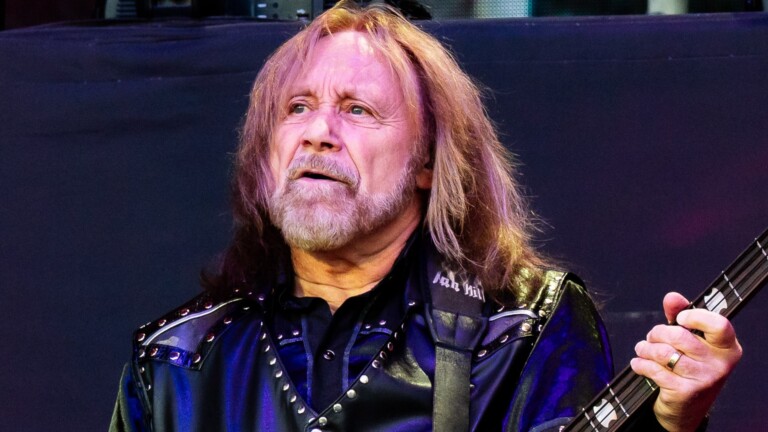
Judas Priest’s Ian Hill Retires After 57 Years, Longest-Serving Member
Judas Priest founding bassist Ian Hill has stepped away from the band after 57 years, citing worsening arthritis and a torn shoulder tendon, with Uriah Heep’s Davey Rimmer set to take his place on bass starting with the band’s 2027 touring.
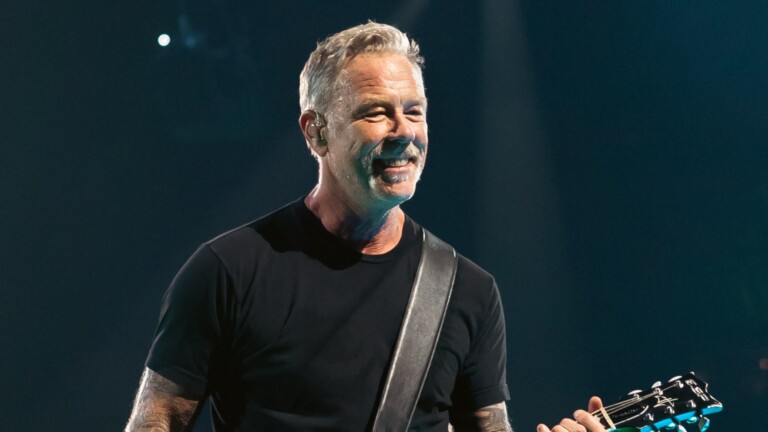
James Hetfield Tells Sphere Crowd Metallica Won’t Push a Political Agenda
James Hetfield addressed the Las Vegas Sphere crowd on October 10, 2026, drawing a line between Metallica and other entertainers who use their platforms for political messaging.
Def Leppard Announces Massive 2027 Tour With Goo Goo Dolls, The Struts
Def Leppard will co-headline a 45-date 2027 North American tour with Goo Goo Dolls, joined by The Struts, running from March 2 in Allentown, Pennsylvania through July 2 in Indianapolis, Indiana.
Alice Cooper Opens Up on Crack Addiction That Nearly Killed Him and Nearly Ended His Marriage
Alice Cooper’s new memoir ‘Devil on My Shoulder’ and a companion interview with The Telegraph detail how his crack cocaine use in the late 1970s and early 1980s brought him close to death and nearly cost him his marriage.