

Rock Hall Opens Major Paul McCartney and Wings Exhibit Through 2026
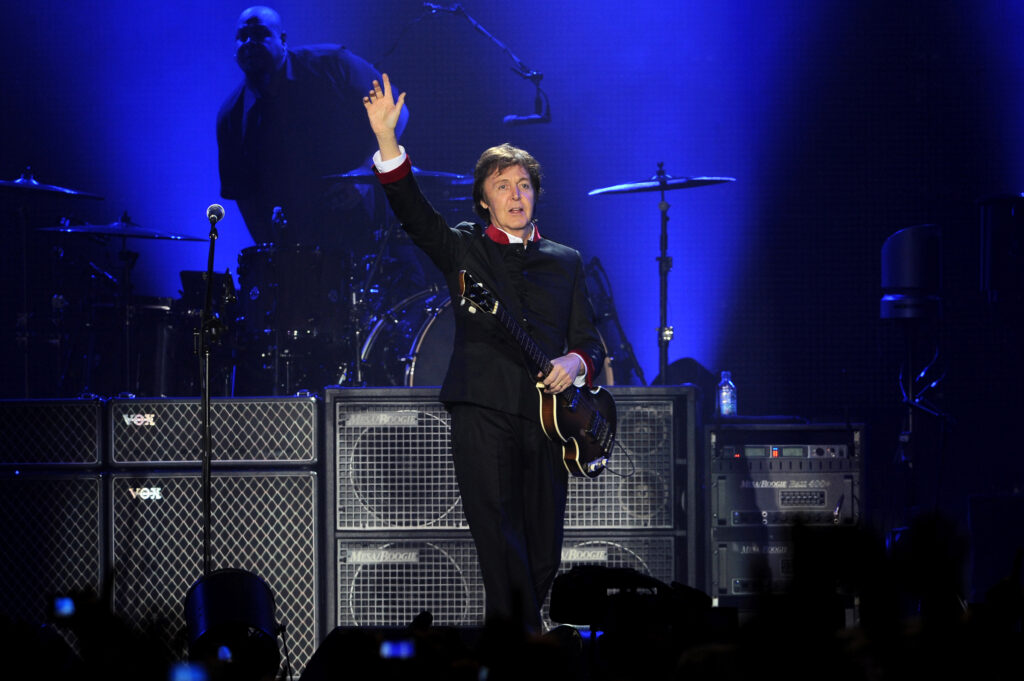
The Cleveland institution’s new installation covers the full Wings journey, from unreleased Japanese tour ephemera to handwritten album artwork drafts.
The Rock & Roll Hall of Fame opened a dedicated Paul McCartney and Wings exhibit on May 15, offering fans an immersive look at the band’s full run through the 1970s. The installation, developed in collaboration with McCartney’s own organization MPL Communications, is currently scheduled to remain open through at least the end of 2026 and features instruments, stage props, tour setlists, outfits, lyrics, and rare archival materials.
What the Exhibit Contains
The exhibit covers the arc of Wings from its earliest days through the band’s final years, giving representation not only to Paul and Linda McCartney but to the other members who passed through the lineup. Among the highlights are ephemera from the Wings Japanese tour that never took place, early conceptual drafts and notes for album artwork showing how several iconic cover sleeves came together, stage props, tour setlists, and the score for the James Bond theme ‘Live and Let Die.’
Instruments are a major component. Wings guitarist Laurence Juber and drummer Steve Holley were among the first contributors to come forward with artifacts. Holley donated his Pollard Syndrum, a two-pad electronic drum unit with a control module that he used in the studio on Back to the Egg and in live performances of ‘Coming Up’ throughout 1979. Also on display is a Flexitone, an instrument invented in the 1920s that Holley used on ‘Arrow Through Me,’ most notably in the brief pause near the song’s opening.
Behind the Scenes: Building the Installation
Andy Leach, the Rock Hall’s senior director of Museum and Archival Collections, led the curatorial effort alongside his colleagues and McCartney’s team at MPL Communications. According to Leach, the project took shape through an extended series of Zoom calls, phone conversations, emails, and travel before the exhibit became a reality.
Leach was candid about his own enthusiasm for the material, singling out Back to the Egg as an underrated record. In his view, had any artist other than McCartney released that album, it would be considered a classic today. That perspective informed the exhibit’s approach of treating the full Wings catalog with seriousness rather than treating the band as a footnote to McCartney’s Beatles legacy.
Workers were still completing final elements of the installation when press had the opportunity to preview the exhibit, a sign of how close to the wire the team was working before the May 15 opening.
Wings’ Growing Critical Reputation
The Rock Hall exhibit arrives at a moment of sustained reappraisal for Wings. McCartney has released several projects in recent years centered on the band, including the Man on the Run documentary, a large-format book, and a comprehensive anthology, described as the first of its kind dedicated to the Wings catalog.
Wings were a polarizing subject for decades, drawing criticism from press and dividing McCartney’s own fanbase. The Rock Hall installation represents an institutional acknowledgment that the band’s work merits serious archival attention, a recognition that has been building steadily as the years have passed.
What we know
- The Rock & Roll Hall of Fame’s Wings exhibit opened on May 15.
- The exhibit is currently scheduled to remain open through at least the end of 2026.
- The exhibit was developed in collaboration with McCartney’s organization, MPL Communications.
- Andy Leach, senior director of Museum and Archival Collections at the Rock Hall, led the curatorial work on the exhibit.
- Laurence Juber and Steve Holley were among the first contributors to donate artifacts to the exhibit.
- Steve Holley’s Pollard Syndrum, used on Back to the Egg and in live performances of ‘Coming Up’ in 1979, is on display.
- A Flexitone, an instrument invented in the 1920s that Holley used on ‘Arrow Through Me,’ is also included in the exhibit.
- The exhibit includes ephemera from the Wings Japanese tour that never took place, early album artwork drafts, stage props, tour setlists, and the score for ‘Live and Let Die.’
The take
The Rock Hall’s decision to dedicate a full exhibit to Wings rather than folding the band into a broader McCartney retrospective is a meaningful curatorial choice. For most of the 1980s and 1990s, Wings occupied an awkward position in rock history: too commercially successful to dismiss, yet consistently overshadowed by the Beatles mythology that surrounded McCartney at every turn. Critics who couldn’t separate the man from his former band often used Wings as a punching bag, and even devoted McCartney fans sometimes treated the 1970s catalog as a lesser chapter. That consensus has shifted considerably. The Man on the Run documentary and the Wings anthology have introduced the band’s work to younger listeners while giving longtime fans a more complete picture of what McCartney was building in that decade. Institutionally, the Rock Hall exhibit signals that Wings now belongs in the same conversation as the era’s other canonical acts. The inclusion of contributions from Juber and Holley is also worth noting. Exhibits about legacy bands often center on the most famous member and treat everyone else as supporting cast. Giving the later-period lineup genuine representation, complete with their own instruments and stories, reflects a more honest accounting of how Wings actually functioned as a working band rather than a solo vehicle.
Why it matters
For Classic Rock fans, the Wings exhibit represents a long-overdue institutional reckoning with one of the 1970s’ most commercially dominant and critically undervalued acts. The Rock Hall’s willingness to mount a standalone installation, rather than treating Wings as a McCartney footnote, validates what a significant portion of the fanbase has argued for decades. It also preserves artifacts from band members like Holley and Juber who might otherwise remain on the margins of the official McCartney archive, ensuring a fuller historical record for future generations.
What’s next
The Wings exhibit at the Rock & Roll Hall of Fame is open now and scheduled to run through at least the end of 2026. Fans can visit the installation in Cleveland to see the full range of artifacts, instruments, and archival materials assembled by Leach and his team in collaboration with MPL Communications.
Frequently asked questions
When did the Paul McCartney and Wings Rock Hall exhibit open?
The exhibit opened on May 15 at the Rock & Roll Hall of Fame.
How long will the Wings exhibit be at the Rock Hall?
It is currently scheduled to remain open through at least the end of 2026.
What instruments are on display in the Wings Rock Hall exhibit?
The exhibit includes Steve Holley’s Pollard Syndrum, used on Back to the Egg and in live ‘Coming Up’ performances, as well as a Flexitone that Holley played on ‘Arrow Through Me.’
Who curated the Wings exhibit at the Rock & Roll Hall of Fame?
Andy Leach, the Rock Hall’s senior director of Museum and Archival Collections, led the curatorial effort alongside his team and McCartney’s organization, MPL Communications.
What rare items are included in the Wings Rock Hall exhibit?
The exhibit features ephemera from the Wings Japanese tour that never happened, early album artwork drafts, stage props, tour setlists, member outfits, lyrics, instruments, and the score for ‘Live and Let Die.’
Related coverage

Related Stories
Alice Cooper Opens Up on Crack Addiction That Nearly Killed Him and Nearly Ended His Marriage
Alice Cooper’s new memoir ‘Devil on My Shoulder’ and a companion interview with The Telegraph detail how his crack cocaine use in the late 1970s and early 1980s brought him close to death and nearly cost him his marriage.
Roger Waters and Son Harry Waters Launch Pink Floyd Tribute Tour ‘LEGACY’ for 2027
AEG Presents and ICON LIVE have announced ‘Roger Waters Presents LEGACY: A Pink Floyd Show,’ a new touring production led musically by Harry Waters and launching February 15, 2027 in Columbus, Georgia.
Brian May Says Queen’s Touring Days Are Over
Brian May says he and Roger Taylor quietly agreed a year and a half ago that Queen would not tour again, a choice shaped by the death of a close family friend while the band was on the road in America.
Slash Announces 2027 World Tour and New Album ‘Flying Blind’ With Myles Kennedy
Slash has unveiled a 2027 world tour with Myles Kennedy and The Conspirators and a new album, ‘Flying Blind,’ marking his first dedicated run with the band since 2024.
Michael McDonald Reunites With Son Given Up for Adoption Nearly 60 Years Ago
A St. Louis man named Michael Goessling has learned that Doobie Brothers singer Michael McDonald is his biological father, nearly 60 years after being given up for adoption as an infant.
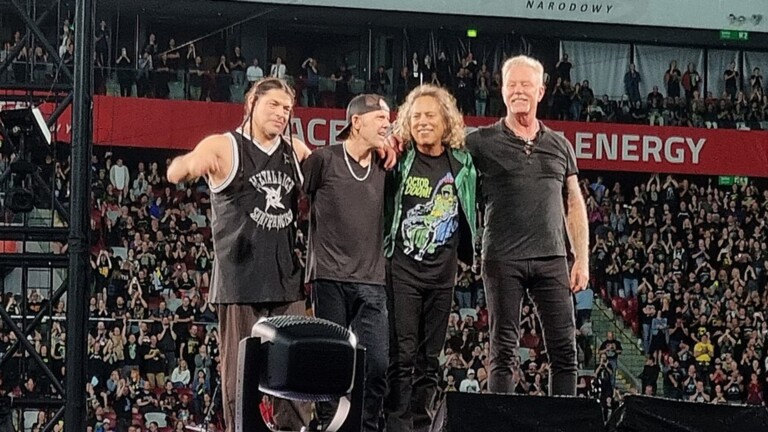
Metallica Kicks Off ‘Life Burns Faster’ Residency at Las Vegas Sphere
Metallica’s “Life Burns Faster” residency opens at the Las Vegas Sphere on October 1, 2026, running through March 2027 with 24 shows, a merch collaboration with adidas and a lineup of fan events across the city.
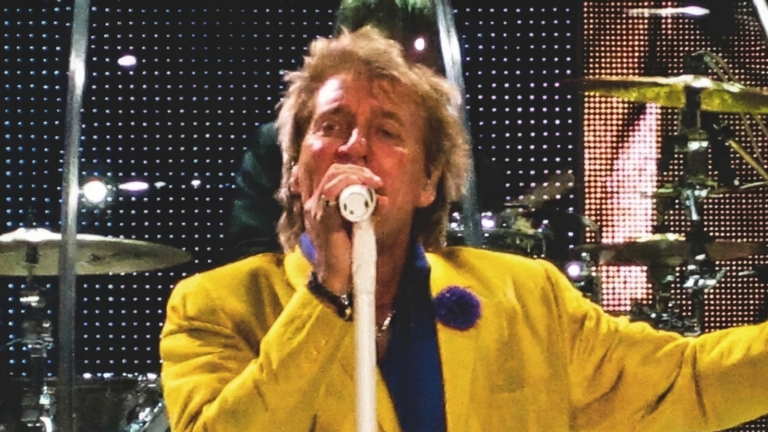
Rod Stewart Announces Retirement From Touring, Reveals 2027 ‘The Final Encore’ Tour Dates
Rod Stewart says his upcoming 2027 tour of the UK and Europe, called The Final Encore, will be his last time touring, though he insists he isn’t stepping away from music entirely.
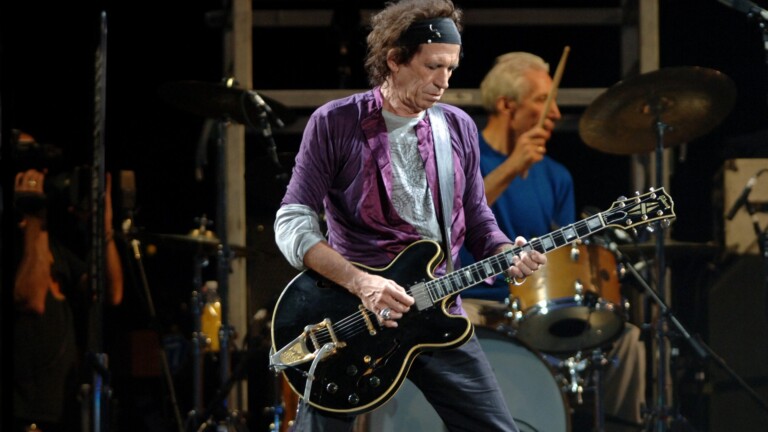
Jo Wood Says Rolling Stones Touring Days May Be Done Because of Keith Richards
Jo Wood, Ronnie Wood’s ex-wife, says she doubts the Rolling Stones will hit the road again, blaming Keith Richards’ hesitance even as the band’s new album Foreign Tongues thrives.

Rush’s Geddy Lee, Alex Lifeson Push Neil Peart Memorial Fund Past $1 Million Goal
Rush’s Geddy Lee and Alex Lifeson delivered a $785,000 check to the Neil Peart Commemorative Task Force, putting a years-long campaign to build the late drummer’s memorial in Ontario over its $1 million target.