

How Michael Anthony Went from Backyard Parties to Van Halen
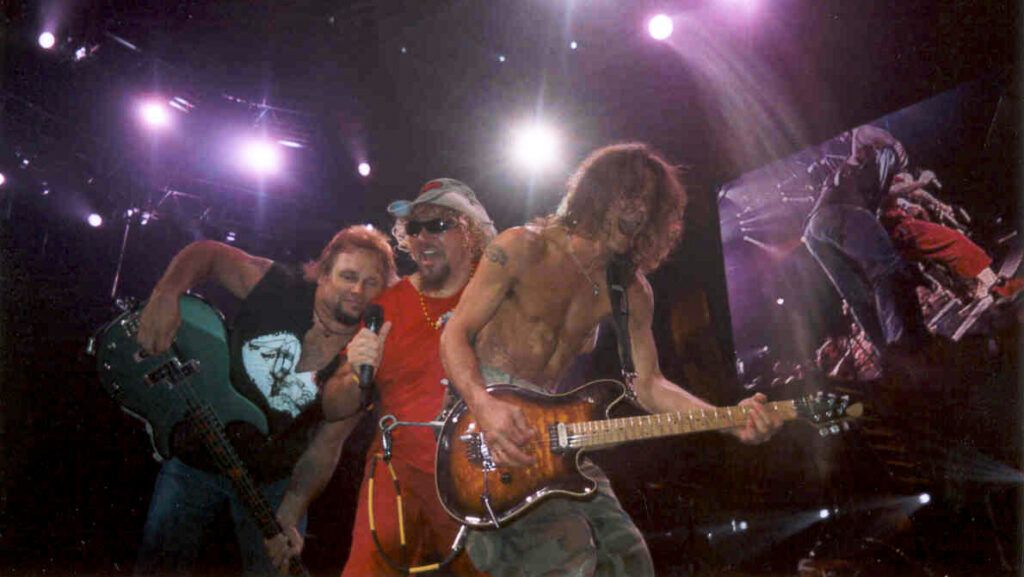
In his own words, the bassist traces the path from fraternity gigs and cover bands to one of rock's most celebrated lineups.
Before Van Halen sold upwards of 80 million albums worldwide and entered the Rock and Roll Hall of Fame in 2007, Michael Anthony was a Southern California kid playing backyard parties in a power trio called Snake. In a November 1995 Bass Player interview, Anthony recalled in detail how a chance encounter at a high school carnival, a borrowed PA system, and a half-second audition decision changed the course of rock history.
From Snake to Mammoth: First Encounters with the Van Halens
Anthony's entry point into the Van Halen orbit was almost accidental. Playing bass and singing lead in Snake, a power trio that worked through covers by ZZ Top, Cream, the Allman Brothers, and the Doobie Brothers, he first caught sight of the Van Halen brothers at a carnival on the field of Arcadia High School in California.
At that point, the band was still called Mammoth, with Eddie on guitar, Alex on drums, and a different bass player. Eddie was even singing lead. The future supergroup was still very much a work in progress, and Anthony had no reason to think their paths would cross again.
Pasadena City College and the Skunk-Haired Stranger
The real connection formed at Pasadena City College, where Anthony, the Van Halen brothers, and David Lee Roth were all enrolled. Anthony had initially been pushed by his father to major in psychology, though he managed to take music electives including jazz improvisation, theory, and piano. After about a year, his father relented and allowed him to switch his major entirely to music.
It was during this period that Snake opened for Van Halen, and the band asked to borrow Snake's PA after their own had blown up. Anthony also had his first memorable run-in with Roth. As he described it in the Bass Player interview: ‘Roth came over to me; he was wearing this little vest, had a cane, and his hair was dyed like a skunk. He said, “How do you like my boys?” I stepped back and thought, “Get the fuck away from me!” Little did I know what it would lead up to!'
The Audition: Beat Changes, Time Signatures, and Half a Second of Thought
The opening came through a mutual friend. Eddie told the friend that the band was looking to replace their bass player, and the friend passed along Anthony's name. The audition was a genuine test. Anthony had come up playing straightforward 4/4 rock in Snake, while Eddie and Alex had been sharpening their chops at Hollywood's Gazzarri's. They ran him through beat changes and different time signatures before the session opened up into a jam.
When Eddie and Alex asked him to join afterward, Anthony said he thought about it for half a second before answering. The band quickly got to work, with Anthony learning five cover tunes a day to build a set list for parties. The repertoire was wide, running from the Ohio Players to KC and the Sunshine Band, and eventually the group moved from parties into clubs and even weddings.
The gear escalation mirrored the ambition. Anthony had been running two Acoustic 150 amps, but once Eddie found his 100-watt Marshall, the bass rig needed an upgrade. Anthony bought his first SVT stack. As he put it: ‘I remember thinking, “I'm in the big leagues now!”‘
What Van Halen Went On to Achieve
The lineup that crystallized around that Pasadena City College connection went on to become one of the defining acts in classic rock. Van Halen sold upwards of 80 million albums worldwide, earned a Grammy, and was inducted into the Rock and Roll Hall of Fame in 2007. Anthony built a reputation as one of the most hard-rocking bassists of his generation, known as much for his backing vocals as for his low-end work.
The story of how that band came together, told in Anthony's own voice, is a reminder of how much of rock history hinges on borrowed gear, chance encounters, and the willingness to say yes without overthinking it.
What we know
- Michael Anthony played bass and sang lead in a power trio called Snake before joining Van Halen, performing covers by ZZ Top, Cream, the Allman Brothers, and the Doobie Brothers.
- Anthony first saw the Van Halen brothers perform at a carnival on the field of Arcadia High School in California, when the band was still called Mammoth and Eddie was singing lead.
- Anthony, the Van Halen brothers, and David Lee Roth were all enrolled at Pasadena City College at the same time.
- Snake opened for Van Halen and lent the band their PA after Van Halen's own PA blew up.
- After the audition, Eddie and Alex asked Anthony to join, and he agreed after thinking about it for half a second.
- Van Halen sold upwards of 80 million albums worldwide, won a Grammy, and was inducted into the Rock and Roll Hall of Fame in 2007.
- Anthony's account of joining Van Halen was published in the November 1995 issue of Bass Player magazine.
The take
The Van Halen origin story has been told many times, but Anthony's account from Bass Player cuts through the mythology with something more useful: a ground-level view of how the Southern California club circuit actually functioned as a proving ground in the early-to-mid 1970s. Venues like Gazzarri's on the Sunset Strip were genuine finishing schools for hard rock acts, and the Van Halen brothers' experience there gave them a measurable edge over bands still working backyard parties. That gap is exactly what Anthony describes feeling at the audition, when the beat changes and time signatures hit him differently than anything Snake had prepared him for.
The borrowed PA detail is also worth noting. Gear sharing among local bands was common in that era, and it often served as an informal networking mechanism. The fact that Snake's PA became the bridge between two acts that might otherwise have stayed in separate orbits is the kind of contingency that shapes careers without anyone planning it.
Anthony's vocal contributions to Van Halen are sometimes underappreciated in retrospect, but the band's signature three-part harmonies with Roth depended on him. His role was never purely functional. The SVT stack anecdote, meanwhile, speaks to a dynamic that defined the band's entire aesthetic: Eddie's relentless gear escalation forced everyone around him to keep up, and that competitive energy translated directly into the sound that made Van Halen impossible to ignore.
Why it matters
For classic rock fans, the Van Halen formation story is foundational, and Anthony's firsthand account adds texture that polished retrospectives tend to flatten. It illustrates how the Los Angeles rock ecosystem of the early 1970s, built on club gigs, borrowed equipment, and word-of-mouth referrals, produced some of the most commercially successful acts in rock history. Understanding that context matters because it reframes Van Halen's eventual arena dominance as the product of years of unglamorous groundwork rather than overnight discovery.
What's next
The November 1995 Bass Player interview from which Anthony's account is drawn remains the primary source for this chapter of Van Halen's history in his own words. No additional events or releases are referenced in the available sourcing.
Frequently asked questions
What band was Michael Anthony in before Van Halen?
Anthony played bass and sang lead in a power trio called Snake, which performed covers by ZZ Top, Cream, the Allman Brothers, and the Doobie Brothers at backyard parties and similar venues.
How did Michael Anthony first meet the Van Halen brothers?
Anthony first saw Eddie and Alex Van Halen perform at a carnival on the field of Arcadia High School in California, when the band was still called Mammoth and had a different bass player.
Where did Michael Anthony audition for Van Halen?
The connection that led to the audition formed at Pasadena City College, where Anthony, the Van Halen brothers, and David Lee Roth were all enrolled at the same time.
When was Van Halen inducted into the Rock and Roll Hall of Fame?
Van Halen was inducted into the Rock and Roll Hall of Fame in 2007.
How many albums did Van Halen sell worldwide?
Van Halen sold upwards of 80 million albums worldwide across their career.
Related coverage
Related Stories
Kid Rock Calls Trump Friendship a Front-Row Seat to ‘Greatest S— Show on Earth’
Kid Rock told Sky News Australia he calls President Trump late at night to ‘shoot the s—‘ and calls it a front-row seat to the greatest show going.
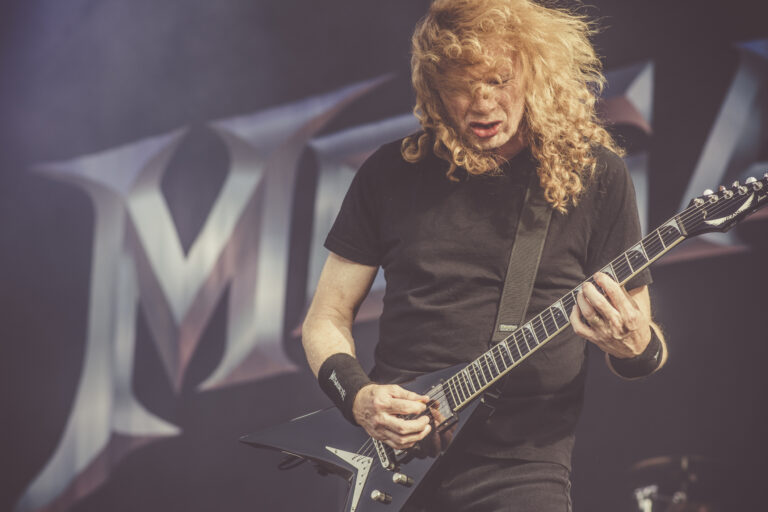
Watch: Dave Mustaine Cusses Out Finnish Journalist Over Hetfield Fight Question
Dave Mustaine called out a Finnish journalist mid-show in Helsinki after the reporter asked who would win in a fight between Mustaine and James Hetfield.
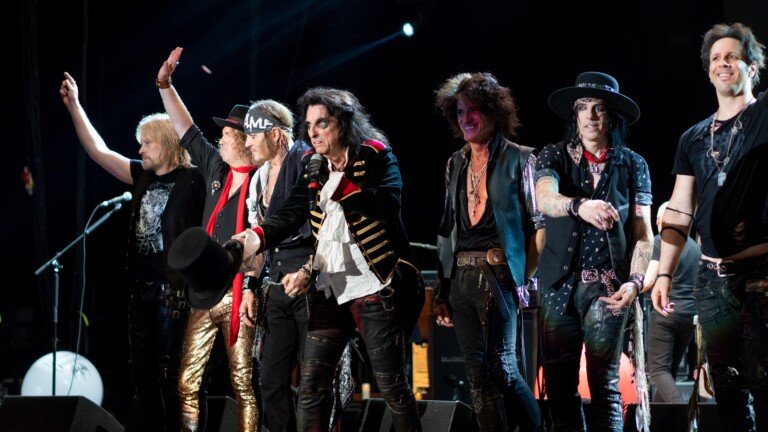
Hollywood Vampires Announce Live Album From 2018 Montreux Jazz Festival Show
Hollywood Vampires announce ‘At Montreux Jazz Festival,’ a live album from their 2018 performance, featuring an unreleased cover of Motörhead’s ‘Ace Of Spades.’
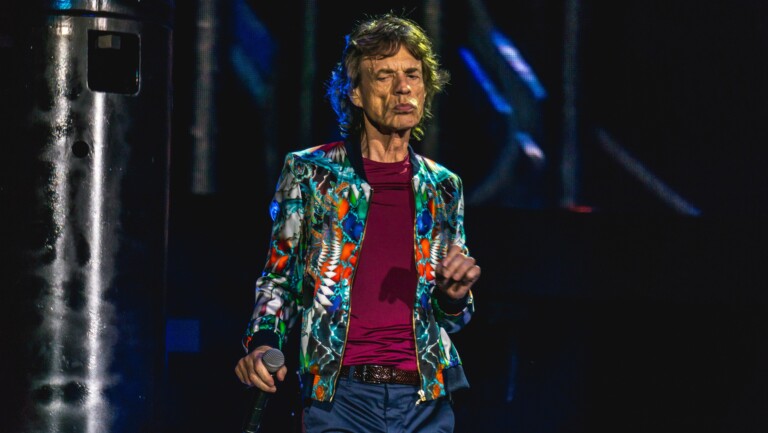
Mick Jagger Says Paul McCartney Nailed ‘Foreign Tongues’ Bass Part in 10 Minutes
Mick Jagger tells NME it was ‘very easy’ working with Paul McCartney on ‘Covered In You’ from the Rolling Stones’ upcoming album ‘Foreign Tongues’, due July 10.
Rush Postpones Two Fort Worth Shows After Geddy Lee Falls Ill
Rush has postponed two Dickies Arena shows in Fort Worth after Geddy Lee was diagnosed with laryngitis and bronchitis. New dates are July 11 and July 13.
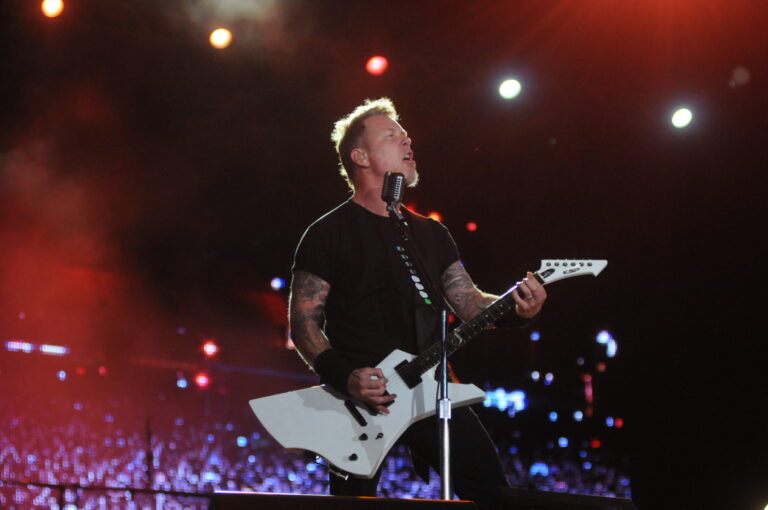
Metallica Defies Principality Stadium Ban, Performs Tom Jones’ ‘Delilah’ in Cardiff
Metallica defied a standing ban at Cardiff’s Principality Stadium by performing Tom Jones’ ‘Delilah’ during their M72 World Tour stop in Wales.
Peter Gabriel Releases ‘I Belong to the Sky,’ Seventh Track from Upcoming Album o/i
Peter Gabriel has released ‘I Belong to the Sky,’ the seventh full-moon single from his upcoming album o/i, featuring drummer Manu Katché and artwork by
Bruce Springsteen Eulogizes Clive Davis: ‘He Changed My Life Forever’
Bruce Springsteen delivered a moving eulogy at Clive Davis’s New York funeral, recalling how the legendary executive signed him to Columbia Records in 1972.
Bob Britt Talks About Why He Quit Dylan’s Band as Joel Paterson Steps In
Guitarist Bob Britt has quit Bob Dylan’s Long Hot Summer Tour ’26 mid-run, saying he left of his own accord. Joel Paterson has been recruited to fill the