

31 Music Groups Warn Labels and Publishers to Stop Misusing Artist Rights in AI Deals

The open letter, coordinated by the European Music Managers Alliance, demands consent, fair compensation, and transparency before any AI licensing moves forward.
A worldwide coalition of 31 organizations representing artists, songwriters and music managers published an open letter on June 22 demanding that record labels and publishers stop negotiating AI licensing deals without the meaningful consent of the creators whose work, voices, performances, likenesses and creative identities underpin those agreements. The letter was coordinated by the European Music Managers Alliance and signed by groups including Irving Azoff’s Music Artists Coalition and the Songwriters of North America.
What the Letter Says
The letter, titled ‘Artists And Songwriters Must Not Be Pressured Into AI Deals Without Meaningful Consent,’ argues that artists and songwriters with existing recording and publishing deals are being told by major labels and publishers that they will be opted into AI-related uses by default, with little actual choice offered. Those signing new deals, the letter adds, are being presented with AI rights clauses as a standard condition of signing.
The coalition frames the situation as a fundamental rights issue. Artists and songwriters, the letter states, ‘remain the primary holders of many of the rights at stake, including moral, neighbouring, image and personality rights.’ Those rights, it argues, are ‘not label or publishers assets to be licensed without clear authority, consent and accountability.’
The letter also takes direct aim at what it calls hypocrisy in the industry’s posture: labels and publishers rightly argue that AI companies need permission to train on their music catalogues, yet those same companies will not grant artists and songwriters the same rights over their own work.
Three Core Demands
The signatories outline three core principles they want implemented across the industry.
- Meaningful consent: artists and songwriters must actively and specifically consent before their works, voice, performance, likeness or creative identity is used in connection with AI, and must retain control over how it will be used
- Fair compensation: artists who participate in AI-related uses must share in the profits and value generated, and must not be treated simply as a general label asset
- Transparency: artists must receive clear, timely and understandable information about any AI-related deal or proposal affecting their rights before being expected to make a decision
Who Signed the Letter
The letter carries signatures from a broad cross-section of the global music community. Key signatories include the European Music Managers Alliance, the European Composer and Songwriter Alliance, the Music Artists Coalition, the Songwriters of North America, the Artist Rights Alliance, the Black Music Action Coalition, the Featured Artists Coalition and the Ivors Academy, among others.
The Deals That Prompted the Warning
The letter arrives against a backdrop of accelerating AI licensing activity. Warner Music Group has struck deals with Suno, Klay, Udio and others. Universal Music Group has reached agreements with Udio, Spotify, Klay and others. Sony Music has a deal with Klay. Merlin and Kobalt have both reached agreements with Udio and ElevenLabs.
Reporting from Billboard in April revealed that multiple top talent attorneys had been made aware that labels and publishers could feasibly use common contract language in U.S. record deals, related to blanket licensing and exploitation, to opt artists’ works into AI training without seeking individual artist approval. Jason Boyarski, founding partner at Boyarski Fritz, was quoted at the time saying, ‘Some of the labels have already taken the position that they technically don’t need special approvals to train.’
Audrey Benoualid, partner at Myman Greenspan Fox Rosenberg Mobasser Younger & Light, told Billboard in April that a distinction is emerging between how training and outputs are treated in these deals. ‘We’re seeing a differentiation between the way training, or inputs, and outputs are treated,’ she said. While many deal announcements note that artists can opt out of having their name, image or likeness used in AI outputs, AI training itself is rarely addressed.
Billboard has also previously reported specific contract language from BMG, Sony and Believe, including a provision from Sony-owned dance label B1 Recordings that granted ‘unlimited, exclusive rights’ to ‘use the recording in models and systems of generative artificial intelligence and applications based thereon, including generative AI, including [but] not limited to the analysis of the Recording for the purpose of extracting information on patterns, trends and correlations (AI training).’
The IFPI Responds
A spokesperson for the IFPI, which represents the global recorded music industry, pushed back on the framing of the letter. ‘Music companies are leading the fight to protect artists’ and songwriters’ rights in the age of AI,’ the spokesperson said, adding that while member companies have taken different approaches, they share the same fundamental objectives: ‘combating the unauthorized use of music and establishing licensing models that return revenue to artists and songwriters.’
The IFPI spokesperson also pointed to litigation and legislative efforts, stating that ‘at a time when some tech companies large and small are engaging in the wholesale theft of virtually every song ever recorded, our members have sued infringers, pushed for legislation, and developed new licensing models, all to protect the interests of artists, songwriters and rightsholders and ensure they are compensated.’
The open letter arrives just over two weeks after the American Federation of Musicians sued Universal Music Group and Warner Music Group, alleging the two majors licensed their members’ recordings to Suno and Udio without paying or crediting the musicians who played on them.
What we know
- The open letter was published on June 22 and coordinated by the European Music Managers Alliance (EMMA), with 31 organizations signing on.
- Signatories include the Music Artists Coalition (founded by Irving Azoff), the Songwriters of North America, the Ivors Academy, the Black Music Action Coalition, the Artist Rights Alliance, the Featured Artists Coalition and the European Composer and Songwriter Alliance.
- The letter states that artists and songwriters with existing deals are being told they will be opted into AI-related uses by default, with little actual choice offered.
- Artists signing new deals are being presented with AI rights clauses as a standard condition of signing.
- The letter outlines three core demands: meaningful consent before any AI use, fair compensation for participation, and full transparency about deal terms.
- The IFPI responded by saying music companies are ‘leading the fight to protect artists’ and songwriters’ rights in the age of AI’ and have sued infringers, pushed for legislation and developed new licensing models.
- The American Federation of Musicians sued Universal Music Group and Warner Music Group just over two weeks before the letter’s publication, alleging the majors licensed members’ recordings to Suno and Udio without paying or crediting the musicians.
- Warner Music Group has reached licensing deals with Suno, Klay, Udio and others; Universal Music Group has deals with Udio, Spotify, Klay and others; Sony Music has a deal with Klay; Merlin and Kobalt have deals with Udio and ElevenLabs.
The take
The tension at the center of this letter is one the music industry has been building toward for years. Labels and publishers have spent considerable resources arguing in court and in Congress that AI companies cannot train on copyrighted recordings without permission. That argument is legally and morally coherent. What this coalition is pointing out is that the same logic is not being applied internally, where the same companies are treating existing contract language as sufficient cover to move artists’ work into AI training pipelines without individual consent.
This fits a broader pattern that has played out in the streaming era, the sync licensing era and the digital download era before it. Each time a new revenue model emerges, the question of how existing contract language applies to that model becomes a flashpoint, and artists typically find themselves on the losing end of the initial interpretation. The difference now is that the stakes are arguably higher. AI training is not a one-time use; it is the foundation of a system that can generate competing content at scale.
The involvement of groups like the Music Artists Coalition, which represents some of the industry’s most commercially significant acts, and the Ivors Academy, which carries significant weight in the UK policy conversation, signals that this is not a fringe complaint. The letter’s timing, arriving as policymakers in multiple jurisdictions are actively reviewing copyright frameworks in response to AI, is clearly deliberate. The structures being negotiated right now will set precedents that are difficult to unwind.
Why it matters
For classic rock and legacy artists especially, this issue carries particular weight. Catalogues built over decades represent not just income but identity, and the prospect of those recordings being used to train AI systems that can replicate or synthesize their sound without consent or compensation is a concrete threat. The letter’s insistence that moral rights, image rights and personality rights belong to the artist, not the label, is a direct challenge to how major companies have historically treated catalogue assets. How this dispute resolves will shape the terms under which the next generation of artists signs deals.
What’s next
The letter calls on record companies, publishers and policymakers to implement its three core principles: meaningful consent, fair compensation and full transparency. Policymakers in multiple jurisdictions are currently reviewing copyright rules in response to AI, and the letter’s signatories have framed their demands as directly relevant to those ongoing legislative processes. The American Federation of Musicians lawsuit against Universal Music Group and Warner Music Group remains active.
Frequently asked questions
Who signed the open letter about AI music deals?
The letter was signed by 31 organizations including the Music Artists Coalition, the Songwriters of North America, the Ivors Academy, the Black Music Action Coalition, the Artist Rights Alliance, the Featured Artists Coalition and the European Composer and Songwriter Alliance, among others.
What are artists and songwriters asking for in the letter?
The letter demands three things: meaningful consent before any AI use of an artist’s work, voice, performance or likeness; fair compensation if an artist participates in AI-related uses; and full transparency about the terms of any AI deal affecting their rights.
How have labels responded to the open letter?
The IFPI, which represents the global recorded music industry, said music companies are ‘leading the fight to protect artists’ and songwriters’ rights in the age of AI’ and pointed to lawsuits against infringers, legislative advocacy and new licensing models as evidence.
Which AI companies have labels already signed deals with?
Warner Music Group has deals with Suno, Klay and Udio, among others. Universal Music Group has deals with Udio, Spotify and Klay. Sony Music has a deal with Klay, and Merlin and Kobalt have both reached agreements with Udio and ElevenLabs.
Can labels opt artists into AI training without their permission?
According to reporting cited in the letter, multiple top talent attorneys have been made aware that labels could feasibly use existing blanket licensing and exploitation language in U.S. record deals to opt artists’ works into AI training without seeking individual approval.


Related Stories
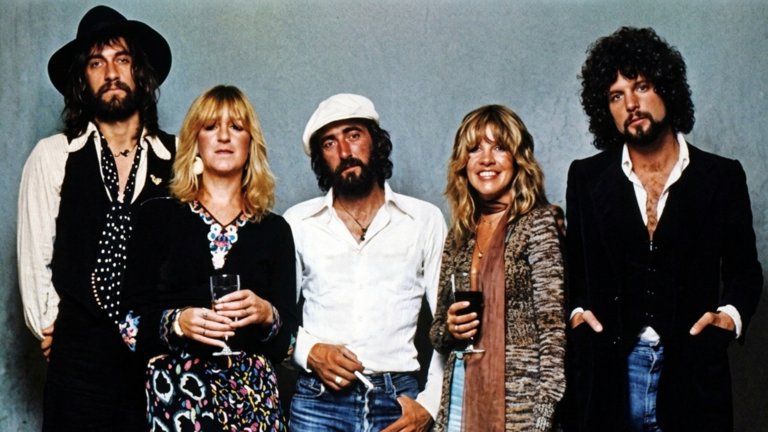
Fleetwood Mac Documentary ‘The Chain’ Gets Title and Release Date
Fleetwood Mac: The Chain, the band’s first fully authorized documentary, arrives on Apple TV on January 29, 2027, coinciding with the 50th anniversary of Rumours.

John Anderson, ‘Swingin” and ‘Seminole Wind’ Singer, Dies at 71
John Anderson, the Country Music Hall of Fame singer behind “Swingin'” and “Seminole Wind,” has died at age 71, only days after taking part in Nashville’s 2026 Medallion Ceremony.

Judas Priest Locks In First Confirmed 2027 US Tour Date at Boardwalk Rock
Judas Priest has confirmed its first US concert of 2027, a slot on the Iron Maiden-headlined Sunday bill at the Boardwalk Rock festival in Ocean City, Maryland.

Robert Plant Opens Up on Son Karac’s 1977 Death and His Quiet Life Today
In a new Sunday Times interview, Robert Plant describes how the 1977 death of his five-year-old son Karac altered his attachment to Led Zeppelin, and shares details of his present-day life in a small Worcestershire village.
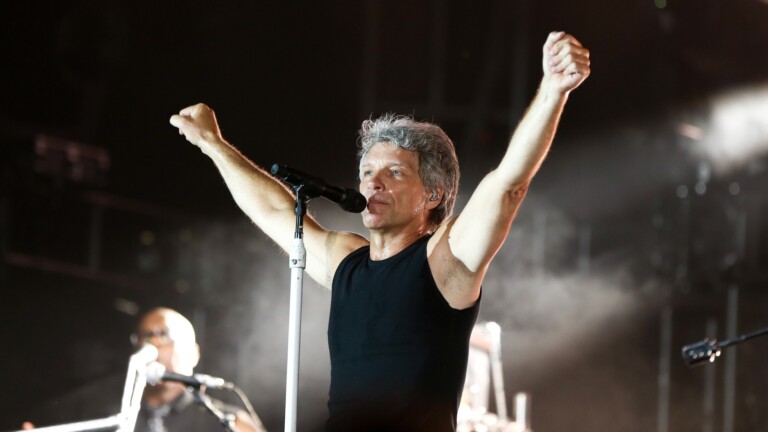
Bon Jovi Extends 2027 Stadium Dates, Expanding Forever Tour to Australia, UK and North America
Bon Jovi is expanding its Forever Tour with seven new 2027 stadium shows spanning Australia, the UK and North America, building on sold-out dates at Madison Square Garden and Wembley Stadium earlier this year.

Motley Crue Sets 2027 ‘Carnival of Sins in Sin City’ Residency at Caesars Palace
Motley Crue has unveiled an eight-show Las Vegas residency, ‘Carnival of Sins in Sin City,’ set for The Colosseum at Caesars Palace from March 19 to April 3, 2027.

Led Zeppelin Lets ‘Stairway to Heaven’ Soundtrack a Movie Trailer for the First Time, for Greta Gerwig’s Narnia Film
Led Zeppelin has granted permission for ‘Stairway to Heaven’ to appear in a film for the first time, backing the debut trailer for Greta Gerwig’s Narnia: The Magician’s Nephew.

Cheap Trick 2027 Concert Dates Announced
Cheap Trick has booked its first three concert dates for 2027, set for February and April, as the band’s ongoing All Washed Up Tour continues through the fall of 2026.
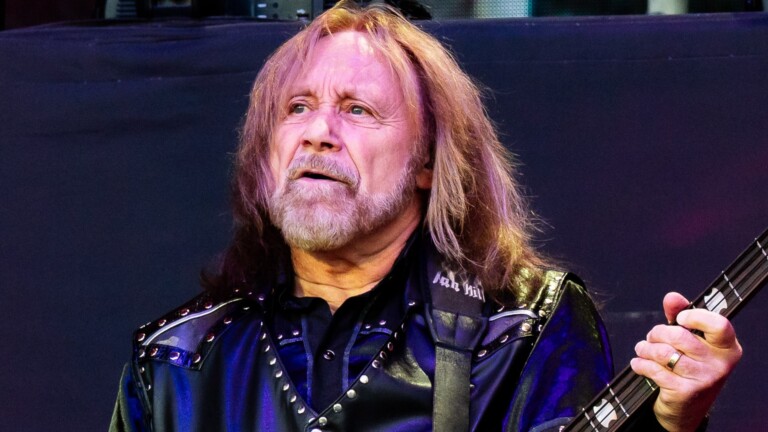
Judas Priest’s Ian Hill Retires After 57 Years, Longest-Serving Member
Judas Priest founding bassist Ian Hill has stepped away from the band after 57 years, citing worsening arthritis and a torn shoulder tendon, with Uriah Heep’s Davey Rimmer set to take his place on bass starting with the band’s 2027 touring.