

Dave Davies Hits Back at Moby Over ‘Lola’ Trans Criticism
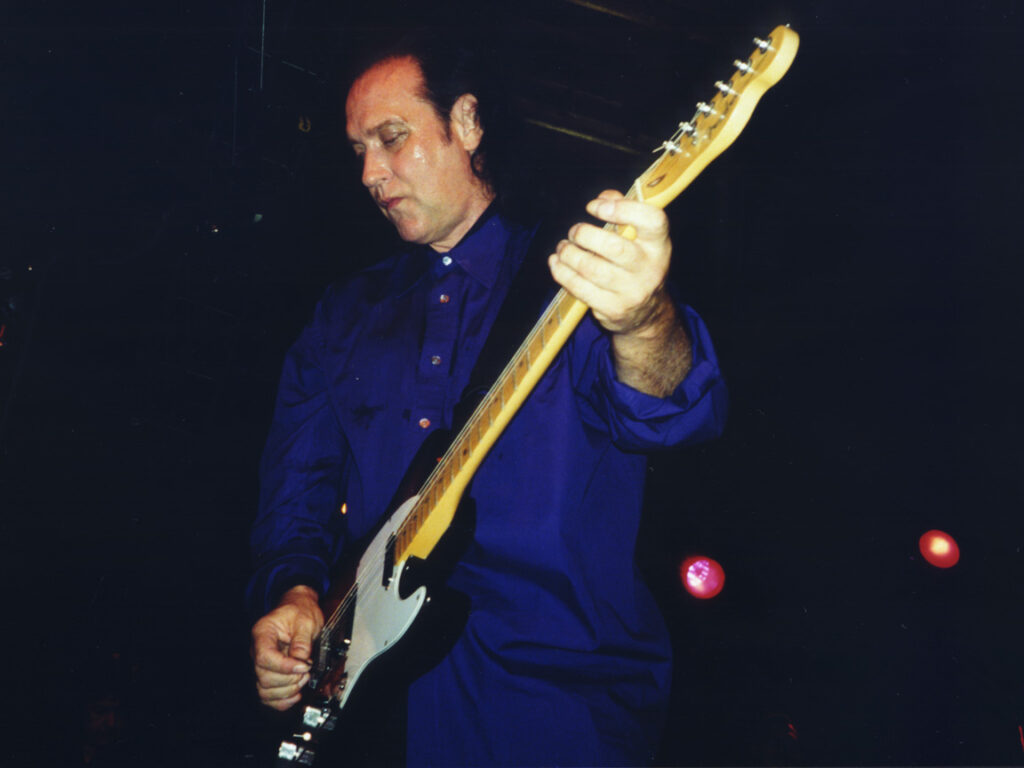
Dave Davies has fired back at Moby after the electronic artist criticized The Kinks’ 1970 classic “Lola,” opening up a new culture-war fault line around one of rock’s most debated story songs.
The flashpoint began when Moby, speaking to The Guardian’s Honest Playlist series, named “Lola” as a track he can no longer hear the same way. In that interview, Moby said the lyrics felt “gross and transphobic” and called them “unevolved,” a sharp reassessment of a song that has long occupied complicated ground between mainstream classic-rock canon and queer cultural history.
Davies, The Kinks’ co-founder and lead guitarist, did not let that pass quietly. In posts on X, he said he was “highly insulted” by the suggestion that his brother Ray Davies, who wrote “Lola,” was transphobic or culturally backward. Dave Davies also argued that Moby was flattening context, writing that the band had long-standing connections with queer communities and that “Lola” was never intended as an attack.
The broader argument here is not new, but it keeps resurfacing because “Lola” sits at a strange and important intersection in rock history. Released in 1970, the song tells the story of a young man’s encounter with a gender-nonconforming figure in Soho and includes the line, “Girls will be boys and boys will be girls / It’s a mixed up, muddled up, shook up world.” Depending on your lens, that lyric reads as either empathetic, clumsy, provocative, or all three at once.
In the immediate context of early-70s rock radio, “Lola” was unusual simply for putting gender fluidity in the center of a global hit. It reached No. 2 in the UK and No. 9 on the U.S. Billboard Hot 100, becoming one of The Kinks’ signature songs and a permanent part of classic-rock rotation. For many listeners, especially in earlier generations, it functioned as one of the first mainstream pop texts that acknowledged identities outside heteronormative expectations.
Dave Davies reinforced that defense by citing supportive testimony from transgender punk icon Jayne County, who has praised “Lola” as a song that helped bring a “hush hush” topic into public space. That endorsement has circulated widely in reaction to Moby’s comments and is now central to Davies’ argument that intent and impact should be judged within the era the song came from, not only by contemporary standards.
Still, Moby’s criticism reflects a growing tendency among artists and audiences to revisit canonical songs without granting them automatic immunity because they are old or beloved. That shift has become a defining part of modern music discourse: legacy tracks are now regularly re-evaluated through current frameworks around race, gender, sexuality, and power. In other words, this is about more than one lyric or one social post. It is about how rock history is interpreted in real time.
There is also an intra-rock dynamic at play. The Kinks belong to a generation that often framed ambiguity through irony, character sketches, and social satire. Moby, by contrast, comes from an era where explicit ideological framing is more common in public artist commentary. Those two communication styles often collide, especially online, where nuance is compressed and historical context becomes a casualty.
What makes the exchange notable is that both positions can appear internally coherent to their own audiences. Davies is arguing from intent, biography, and period context. Moby is arguing from present-day reception and listener impact. Neither frame is likely to disappear, which is why debates like this tend to outlive the original headlines.
For now, the Davies-Moby clash has put “Lola” back into the center of the conversation, not as a nostalgia artifact but as a live cultural text that still triggers disagreement more than five decades after release. That alone says something important about The Kinks’ songwriting legacy. Whatever side listeners land on, songs with no edge do not get argued over this intensely in 2026.
And in classic rock terms, that may be the most revealing part of the story: “Lola” remains exactly what enduring catalog songs often are, a mirror that changes depending on who is looking at it and when.

Related Stories
Robert Plant Opens Up on Son Karac’s 1977 Death and His Quiet Life Today
In a new Sunday Times interview, Robert Plant describes how the 1977 death of his five-year-old son Karac altered his attachment to Led Zeppelin, and shares details of his present-day life in a small Worcestershire village.

Bon Jovi Extends 2027 Stadium Dates, Expanding Forever Tour to Australia, UK and North America
Bon Jovi is expanding its Forever Tour with seven new 2027 stadium shows spanning Australia, the UK and North America, building on sold-out dates at Madison Square Garden and Wembley Stadium earlier this year.
Motley Crue Sets 2027 ‘Carnival of Sins in Sin City’ Residency at Caesars Palace
Motley Crue has unveiled an eight-show Las Vegas residency, ‘Carnival of Sins in Sin City,’ set for The Colosseum at Caesars Palace from March 19 to April 3, 2027.
Led Zeppelin Lets ‘Stairway to Heaven’ Soundtrack a Movie Trailer for the First Time, for Greta Gerwig’s Narnia Film
Led Zeppelin has granted permission for ‘Stairway to Heaven’ to appear in a film for the first time, backing the debut trailer for Greta Gerwig’s Narnia: The Magician’s Nephew.
Cheap Trick 2027 Concert Dates Announced
Cheap Trick has booked its first three concert dates for 2027, set for February and April, as the band’s ongoing All Washed Up Tour continues through the fall of 2026.
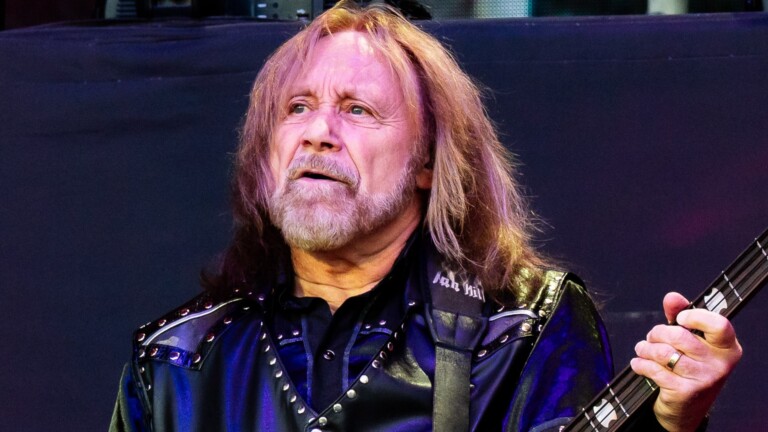
Judas Priest’s Ian Hill Retires After 57 Years, Longest-Serving Member
Judas Priest founding bassist Ian Hill has stepped away from the band after 57 years, citing worsening arthritis and a torn shoulder tendon, with Uriah Heep’s Davey Rimmer set to take his place on bass starting with the band’s 2027 touring.
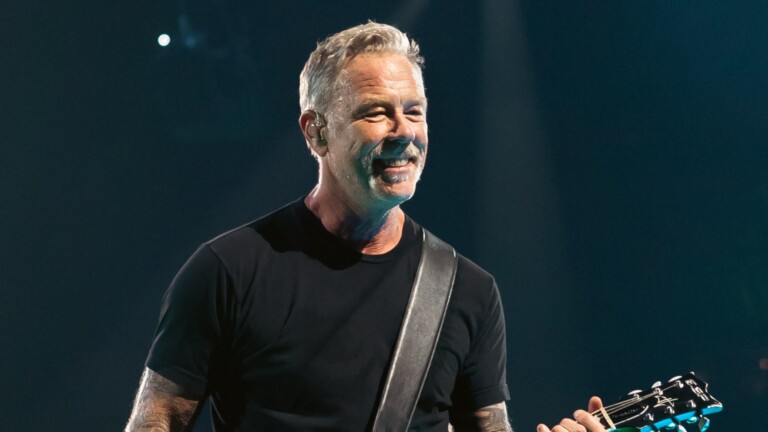
James Hetfield Tells Sphere Crowd Metallica Won’t Push a Political Agenda
James Hetfield addressed the Las Vegas Sphere crowd on October 10, 2026, drawing a line between Metallica and other entertainers who use their platforms for political messaging.
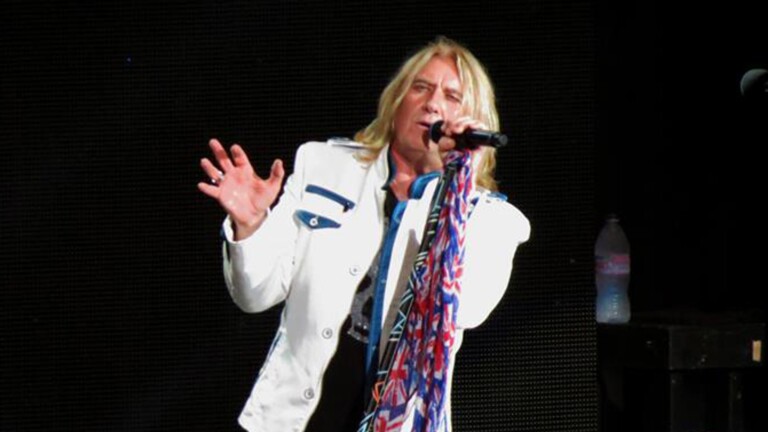
Def Leppard Announces Massive 2027 Tour With Goo Goo Dolls, The Struts
Def Leppard will co-headline a 45-date 2027 North American tour with Goo Goo Dolls, joined by The Struts, running from March 2 in Allentown, Pennsylvania through July 2 in Indianapolis, Indiana.
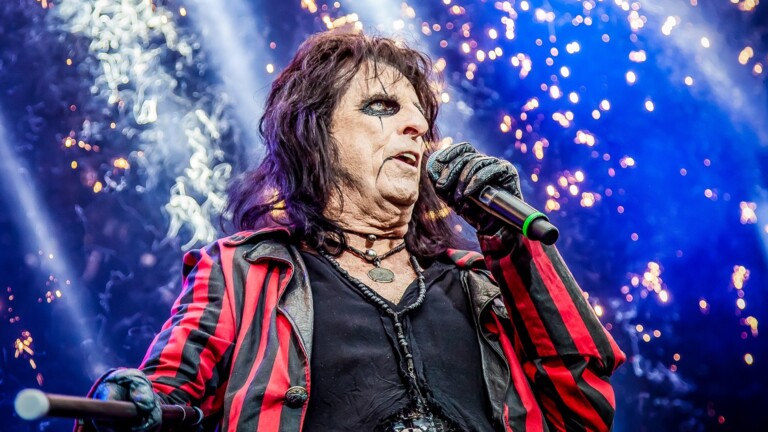
Alice Cooper Opens Up on Crack Addiction That Nearly Killed Him and Nearly Ended His Marriage
Alice Cooper’s new memoir ‘Devil on My Shoulder’ and a companion interview with The Telegraph detail how his crack cocaine use in the late 1970s and early 1980s brought him close to death and nearly cost him his marriage.